Are we really comfortable with the Government authorities?
Just thought of sharing couple of my incidents happened recently with Government officials……
As we all very much know, most of the Govt officials who interact with public do NOT themselves know the procedures to be followed and very importantly, details relating to latest developments like on-line returns, forms downloading from web sites, change in formats of forms / challans etc.
Recently, for making one of the high value payments to “Ministry of Corporate Affairs”, I faced lot of troubles and notably, nobody was able to help me.
It’s some thing like this, when we file our return for this purpose on-line, it auto-generates a challan with pre-filled details. We’ll have to print this and submit to any one of the authorized bank branches along with a cheque / DD for the applicable fee within 3 days, (will be invalid otherwise).
Problems faced:
a) The link on their website for knowing the authorized bank branches was / is not working.
b) When we enquired with the MCA office, no body knew the answer.
c) I checked up with various consultants whom I know, but they are also not sure about this but got me a list of banks, which ‘might’ accept this payment.
d) Sent my admin assistant to these banks and invariably, every bank was unable to accept this payment quoting their own idiotic reasons (all b’coz that they were not clearly instructed by the Govt officials)
i) Some says they are not authorized to accept (in spite of the fact that MCA says they are one of the authorized branches),
ii) Some says cheques are not allowed – only DDs or cash deposits are allowed (the other joint authorized signatory was in London and being high value payment cash deposit was also not possible)
iii) Some says that the cheque has to be drawn in a different name (but the form which was generated by the MCA site clearly indicates a different name, and I strictly followed that thinking that the bankers would create problems otherwise)
e) Then I checked up with another consultant in Chennai. He says that he used to make these payments in ICICI, Nungambakkam Branch. Then, I had no solution except to send the stuff to my ex-admin manager and requested him to submit it immediately since that was the last day. Though he was in hectic work schedule, was able to help me.
Another incident was / is regarding the remittance of service tax. (Need to write a separate blog about the levy of service tax, hence let me talk here only the fuss I faced in remitting the same).
I think that Service Tax authorities spend their most of the time in changing the formats of forms, challans etc very often. To our surprise, every time we remit the monies, there is a change in format with a strict instruction to all banks that old formats should not be accepted. For which, they should also let public know the new format. But what we usually hear is “Format is changed now, but we are not sure about the new one”.
When I remitted this time in Chennai in a format (which itself is a recently changed one and downloaded from the web site of Service Tax), the counter girl said “format is changed and you could try Income Tax Office for the new form”. I told that this is the downloaded form, but she said they are instructed not to accept a different format.
Then I went to Income Tax Dept and checked up about this… “Chanceless, we haven’t changed the format and also, we don’t sell forms”…. Yes, this is what I heard from the superintendent there. Since talking to him will of absolutely no use to me, I went to a law book selling shop and bought those forms whatever they had then and went back again to bank (which took about an hour in this traffic, also that it was raining).
This form insists for more details with a note that these details can be accessed to their web site. Then I called up my colleague to check the website and let me know these details. He called me back in few minutes and told these are not available on this site. I just filled up the form with whatever details I had and submitted to the bank, by clearly freezing my mind that when the concerned officials come back to me for any missing information, I’ll show who I am.
What I’m trying to say here is that taking a corporate decision for any statutory obligation is not so simple. We need to talk to various people like auditors, company secretaries, tax authorities, internal management guys at various hierarchies. After these are done, payment of concerned fees / amount is the last stage which completes the transaction and is supposed to be simple. But the situation is that we face more trouble in remitting the monies to Govt. than deciding the whole objective. Ironically, if the payment is not made on time, our Govt authorities are very perfect in threatening the corporates with penalty, interest, imprisonment etc.
“wat ? wat ? I can’t hear you clearly… “Seeking the help of Information Officer………”
Ha ha, good joke………we are in India man. What we expect from Govt Officials is to do some basic stuff, which they are supposed to do, for which seeking the help of an officer is something senseless effort. Anyway, would like to know whether any one has got justice through Information Officer anywhere in India.
Friday, August 03, 2007


Friday, July 27, 2007
Code of Bank's commitment to Customers
Many of us might be interested to know what exactly is the code of bank's commitment to customers............
For those who are looking for the answer and also about various rules and regulations about banking in India, here's the link........
Click here
Many of us might be interested to know what exactly is the code of bank's commitment to customers............
For those who are looking for the answer and also about various rules and regulations about banking in India, here's the link........
Click here
Wednesday, July 18, 2007

Yesterday, the 17th day of July 2007, was a memorable day for about 20 employees in Cricinfo (which includes me too).
We were all awarded for "Long Term Achievement".
Those who had completed 4 yrs and 6 yrs of service were complemented with Tropy; and 4 & 6 gms of Gold Coin respectively (and of course, respectfully :-).
Friday, July 06, 2007
Investing in Mutual Funds ? - Impossible without Income Tax Permanent Account Number:
Till July 1,2007, only those people who invested in Mutual Funds for amounts more than Rs. 50,000 were needed to quote their IT PAN on the application. To avoid quoting this number and to be on a safer side, our people were wisely splitting the investments in to various parts either in their names or in the names of their relatives.
But, how long the Govt will sleep ?
Quoting IT PAN has been made mandatory by SEBI with effect from 2nd July 2007 for Capital markets and Mutual Fund investments irrespective of the amount of investment.
So, whether the investment is in your name or other's name, it doesn't matter anymore.
Photocopy of the PAN Card of the applicant has to be attached along with the application, without which it can't be processed.
It means that, if you want to invest but don't have PAN, you can do so only after applying for PAN. Of course, photocopy of acknowledged PAN application can be attached alongwith the investment application till the time you are allotted the number.
Till July 1,2007, only those people who invested in Mutual Funds for amounts more than Rs. 50,000 were needed to quote their IT PAN on the application. To avoid quoting this number and to be on a safer side, our people were wisely splitting the investments in to various parts either in their names or in the names of their relatives.
But, how long the Govt will sleep ?
Quoting IT PAN has been made mandatory by SEBI with effect from 2nd July 2007 for Capital markets and Mutual Fund investments irrespective of the amount of investment.
So, whether the investment is in your name or other's name, it doesn't matter anymore.
Photocopy of the PAN Card of the applicant has to be attached along with the application, without which it can't be processed.
It means that, if you want to invest but don't have PAN, you can do so only after applying for PAN. Of course, photocopy of acknowledged PAN application can be attached alongwith the investment application till the time you are allotted the number.
Wednesday, June 27, 2007
There was lot of action in the stock markets yesterday with a volatile swing on selling and buying activities and the sensex closed with a moderate gain of 13 points.
There was buying in Capital Goods stocks.
BHEL extended its gain for the second consecutive day.
Oil company stocks also rose for the second day.
Banking stocks ended lower and other Indices closed flat or lower.
The rupee shed 0.6 paise against the Dollar.
The crude settled at $68/bbl.
The markets are expected to remain volatile in the next few days ahead of the expiry of Futures & Derivatives contract for the current month.
There was buying in Capital Goods stocks.
BHEL extended its gain for the second consecutive day.
Oil company stocks also rose for the second day.
Banking stocks ended lower and other Indices closed flat or lower.
The rupee shed 0.6 paise against the Dollar.
The crude settled at $68/bbl.
The markets are expected to remain volatile in the next few days ahead of the expiry of Futures & Derivatives contract for the current month.
Tuesday, June 26, 2007
Market update:
The markets closed on a positive note on monday at 14,487 with a gain of 20 points over the previous close on the back of roll over of derivatives position, amid weak Global cues.
The markets were pushed up by index weight scrips like ONGC & BHARTI AIRTEL. There was also support from Capital goods heavy weights L&T & BHEL.
Oil stocks were on the limelight and closed higher.
BEML's FPO price was fixed at 1020-1090. Midcap stocks ended higher and the midcap index closed at a new high.
Banking and technology stocks however closed on a negative territory.
The rupee came under pressure and closed as 40.88 to a Dollar due to monthend purchase by the importers and the oil marketing companies.
The crude was traded around $68/bbl.
The markets closed on a positive note on monday at 14,487 with a gain of 20 points over the previous close on the back of roll over of derivatives position, amid weak Global cues.
The markets were pushed up by index weight scrips like ONGC & BHARTI AIRTEL. There was also support from Capital goods heavy weights L&T & BHEL.
Oil stocks were on the limelight and closed higher.
BEML's FPO price was fixed at 1020-1090. Midcap stocks ended higher and the midcap index closed at a new high.
Banking and technology stocks however closed on a negative territory.
The rupee came under pressure and closed as 40.88 to a Dollar due to monthend purchase by the importers and the oil marketing companies.
The crude was traded around $68/bbl.
Thursday, June 21, 2007
Sivaji - cool or fool ?
Had a chance to watch this movie with about 20 colleagues in Urvashi Theatre (Bangalore) - and like everyone, with high expectations.
Pluses: Rajni, Rajni and Rajni
Minuses: rest all........ (except Music and art)
I feel that -
a) the flow of scenes are not good,
b) some of the scenes are unbelievably exaggerated,
c) Rajni has not done certain scenes well which he could have done better,
d) Shankar's punch is present only on scenes referred in point b above
One good news for Rajni fans about this movis is that his styles are awesome and available throughout the movie which entertains everyone....
He uses the word 'Cooool' very often in the movie, but for those who are ditched, it sounds like 'Fooool' :-)
Had a chance to watch this movie with about 20 colleagues in Urvashi Theatre (Bangalore) - and like everyone, with high expectations.
Pluses: Rajni, Rajni and Rajni
Minuses: rest all........ (except Music and art)
I feel that -
a) the flow of scenes are not good,
b) some of the scenes are unbelievably exaggerated,
c) Rajni has not done certain scenes well which he could have done better,
d) Shankar's punch is present only on scenes referred in point b above
One good news for Rajni fans about this movis is that his styles are awesome and available throughout the movie which entertains everyone....
He uses the word 'Cooool' very often in the movie, but for those who are ditched, it sounds like 'Fooool' :-)
Tuesday, June 19, 2007
The market opened higher and hit an Intra day high of 14283 mirroring a firm trend in Asian markets.
Nevertheless, the market dropped 83 points at the close and ended at 14080.34 on concerns that FII may pare their holdings following a circular from CBDT differentiating between trading and investment stocks for taxation purpose.
All the Indices closed negative except bankex.
The rupee surged ahead and closed as 40.78 /$
Additional News: The IPO of ICICI Bank opens today with a price band of Rs.885-950.
Nevertheless, the market dropped 83 points at the close and ended at 14080.34 on concerns that FII may pare their holdings following a circular from CBDT differentiating between trading and investment stocks for taxation purpose.
All the Indices closed negative except bankex.
The rupee surged ahead and closed as 40.78 /$
Additional News: The IPO of ICICI Bank opens today with a price band of Rs.885-950.
Friday, June 15, 2007
Subject: ESPN acquires Cricinfo effective from June 8, 2007
The Wisden Group has agreed to sell Cricinfo to ESPN, one of the world's leading multimedia providers of sports content and entertainment.
Cricinfo and ESPN have worked together for a number of years so there is an existing relationship between the two businesses.
They are delighted to be acquiring Cricinfo, as their existing, highly regarded online sports portfolio does not include a dedicated cricket site.
Cricinfo has developed and flourished over the last three or four years and we are a strong and successful business.
The Wisden Group board has decided to sell now because they believe that Cricinfo will flourish in an environment dedicated to sports broadcasting and entertainment.
Also that Cricinfo can be an important element of ESPN's international development and sees fantastic benefits for Cricinfo in terms of content as well as in terms of expertise and experience in our core business.
ESPN is a multinational business with offices around the world, but for the immediate future Cricinfo offices will continue to operate normally and there will be no changes to the day-to-day running of the business.
The Wisden Group has agreed to sell Cricinfo to ESPN, one of the world's leading multimedia providers of sports content and entertainment.
Cricinfo and ESPN have worked together for a number of years so there is an existing relationship between the two businesses.
They are delighted to be acquiring Cricinfo, as their existing, highly regarded online sports portfolio does not include a dedicated cricket site.
Cricinfo has developed and flourished over the last three or four years and we are a strong and successful business.
The Wisden Group board has decided to sell now because they believe that Cricinfo will flourish in an environment dedicated to sports broadcasting and entertainment.
Also that Cricinfo can be an important element of ESPN's international development and sees fantastic benefits for Cricinfo in terms of content as well as in terms of expertise and experience in our core business.
ESPN is a multinational business with offices around the world, but for the immediate future Cricinfo offices will continue to operate normally and there will be no changes to the day-to-day running of the business.
Launch of NFO "Reliance Equity Advantage Fund- An open-ended Diversified Equity Scheme "
NFO dates
Opens on: 12th June 07
Closes on: 10th July 07A brief on the product...
Sector weightage of Reliance Equity Advantage Fund will mirror exactly that of Nifty on a
Monthly basis.
80% of stocks within each sector will be constituents of Nifty, though not necessarily with their Nifty weights
20% of stocks can be non-Nifty in each sector to provide the additional Alpha possibilities and opportunities
Flexibility of going short exists, but on a net basis sector weightages will be maintained in line with Nifty
NFO dates
Opens on: 12th June 07
Closes on: 10th July 07A brief on the product...
Sector weightage of Reliance Equity Advantage Fund will mirror exactly that of Nifty on a
Monthly basis.
80% of stocks within each sector will be constituents of Nifty, though not necessarily with their Nifty weights
20% of stocks can be non-Nifty in each sector to provide the additional Alpha possibilities and opportunities
Flexibility of going short exists, but on a net basis sector weightages will be maintained in line with Nifty
Monday, July 10, 2006
I read this article on rediff and thought of blogging the same, perhaps for the reason that it supports accountants :-)
Tax deduction? Not the Accountant’s fault
If you are a salaried person, you are likely to be fretting about your employer deducting large chunks from your salary as TDS (tax deduction at source). Every year, your employer's accountant would nag you about tax saving investments made.
Unfair, did you say? It is not entirely so. The employer has his reasons to be officious. Under the Income Tax Act, it is the duty of an employer to deduct tax from the salary paid to its employee. Whether the employer is an individual, a partnership firm, a trust or a company, they have to deduct tax at source from salary. The status of the employer is not relevant.
Now, the IT Act lays down elaborate steps to be followed by an employer while deducting the tax (popularly known as TDS) from the salaries. There are various constraints on the employer.
To start with, there are deadlines for TDS payment to the government; for issuing the TDS certificates (Form 16) to the employees; for filing quarterly e-TDS returns, and many more of such legalities. Plus, there are various penalties and interests that an employer has to pay if there is a default. These detailed procedures might in part explain why most employers are paranoid when it comes to TDS.
The Process
To calculate the TDS for each employee, an employer typically follows these steps:
Estimating the gross salary for the entire year;
Estimating the exemptions from the salary income;
Adding any other income, declared by the employee;
Calculating the amounts of deductions from the salary income based on the declaration given by the employee;
Calculating the tax on the net income of the employee;
Deducting the tax equally over 12 months of the year;
Paying TDS to the government every month by the 7th of next month, filing e-TDS return every quarter;
Issue Form 16 (TDS certificate) to each employee.
Estimating the exemptions from the salary income;
Adding any other income, declared by the employee;
Calculating the amounts of deductions from the salary income based on the declaration given by the employee;
Calculating the tax on the net income of the employee;
Deducting the tax equally over 12 months of the year;
Paying TDS to the government every month by the 7th of next month, filing e-TDS return every quarter;
Issue Form 16 (TDS certificate) to each employee.
Computing salary income:
To compute total income under the head of 'income from salaries', there are various items of income that form part of salary. Salary includes the basic salary, advance salary, the wages, pension, fees, commissions, bonus, taxable gratuity, leave salary, leave encashment salary (not otherwise exempt), profits in lieu of salary, taxable house rent allowance and other taxable allowances.
Not all allowances and perquisites received by an employee are liable to income tax. Some of the allowances and perquisites are totally exempt from income tax, some are partially exempt, while others are fully taxable. There are separate limits and conditions for exemptions for various allowances.
For example, house rent allowance (HRA), leave travel allowance (LTA), medical reimbursements, conveyance allowance each have a different limit and a different set of rules. An employer has to apply each set of rules and limits before deciding what is exempt and what is not.
Tax to be evenly deducted:
What is important for an employee to understand is that the employer is supposed to deduct tax equally over the entire 12 months. Thus, if the total tax to be deducted from the salary for the year is Rs 12,000, then the employer is supposed to deduct Rs 1,000 every month and pay that to the government. If he fails in this, he is penalised.
TDS on other income:
A salaried person is also liable to pay income tax on income from other sources like interest, capital gains and rental income. These are computed under different sections of the Income Tax Act. An employee has the option of declaring his other income to the employer, so that the tax on that income can also get deducted from the salary income. By doing so, the employee can avoid the formalities of paying advance tax (which would have to be paid if the tax is not deducted at source).
Deductions allowed:
After the gross salary is calculated and the exemptions given, the deductions under Section 16 of the IT Act have to be made. Earlier, employees were entitled to standard deduction. Now, that is no longer available. The only deduction remaining is dues paid as professional tax. The balance figure is the amount of taxable salary.
From the taxable salary, the employer can then reduce the deductions permissible under Chapter VI-A of the Income Tax Act. Simply put, he will allow the following deductions:
Under Section 80C: for the various tax saving investments like PPF, life insurance premium, among others.
Under Section 80CCC: for investments in pension schemes by life insurers.
Under Section 80D: for mediclaim premium.
Under Section 80DD: expenses incurred for medical treatment or amount deposited under any scheme framed by the LIC/UTI approved insurer/administrator, for a dependant with ordinary disability or severe disability.
Under Section 80E: interest on loans for education.
Under Section 80GG: for house rent paid.
Under Section 80U: a deduction of Rs 50,000 in respect of a person who at any time during the previous year is certified by a medical authority to be a person with a disability.
Under Section 80CCC: for investments in pension schemes by life insurers.
Under Section 80D: for mediclaim premium.
Under Section 80DD: expenses incurred for medical treatment or amount deposited under any scheme framed by the LIC/UTI approved insurer/administrator, for a dependant with ordinary disability or severe disability.
Under Section 80E: interest on loans for education.
Under Section 80GG: for house rent paid.
Under Section 80U: a deduction of Rs 50,000 in respect of a person who at any time during the previous year is certified by a medical authority to be a person with a disability.
Another important deduction that an employer is allowed to make from the income pertains to the interest on housing loans up to a maximum of Rs 1.5 lakh per year. Of course, for this, just as for other deductions, the employee would have to furnish proof to the employer. It may be noted that there are limits laid down in the
Income Tax Act for each of these sections.
Deductions not allowed:
One important point to be noted here is that although a taxpayer may be entitled to several deductions from his income for the purpose of TDS from salary, the employer cannot reduce all the deductions.
He can give credit only for those deductions that are mentioned in the annual circular issued by the government. Thus, a taxpayer may have given a donation to say, CRY and for this, he would be entitled to deduction under Section 80G. However, while calculating TDS from salary, the employer is not allowed to take this into consideration. As far as donations are concerned, an employer is allowed to take into consideration only donations given to the Prime Minister's Relief Fund and a few other similar donations.
The employer has to then calculate the tax payable on this income and deduct this tax in equal monthly installments. Tax is to be deducted by the employer at the time of payment of salary or at the time of credit of the salary whichever is earlier. Tax will be deducted only if the total income of the employee exceeds the threshold limit of Rs 1 lakh in case of male employees, Rs 1.35 lakh in case of female employees and Rs 1.85 lakh in the case of senior citizens.
One-time payments:
In some situations, one-time payments are made during the year -- for example, bonus, incentives, joining bonus, and the like. The tax payable on such an amount would be deducted immediately. For example, if an employee is in the top tax bracket (that is 30 per cent) and his income is more than Rs 10 lakh, and gets a Diwali bonus of Rs 1 lakh, then the employer would deduct Rs 33,660 (Rs 30,000 as tax and Rs 3,000 as surcharge at 10 per cent on the tax and Rs 660 as education cess at 2 per cent on the tax plus surcharge) from the bonus/increment and pay the net amount to him.
If the employer fails to deduct the whole or any part of the TDS, then he shall be liable to pay simple interest at 12 per cent on the amount not deducted or short deducted.
The Timing
After the tax is deducted, the employer has to pay it to the government within 7 days from the end of the month. At the end of the year, the employer has to issue the salary certificate to the employee. While doing this, the employer has to quote the correct permanent account number (PAN) of the employee in the certificate. If the correct PAN is not quoted or if the same is not quoted at all then the employer is penalised.
So if you were thinking that the nosy accountants in your office were too eager to hack your salary to pay to the government, you have to give them the benefit of doubt. Deducting tax from salary is as painful, if not more, for the employer as it is to the employee.
Monday, June 05, 2006
Comments regarding removal or continuance of exemptions and deductions under the Income Tax Act, 1961.
Government is committed to simplify the tax laws, minimize the distortions within the tax structure and broaden the tax base. In this context, tax incentives in the form of various exemptions and deductions are being reviewed. Government is keen to involve all stakeholders in this exercise.
Accordingly, existing exemptions and deductions under the Income Tax Act, 1961 are listed below and comments with supporting rationale for their removal or continuance may be sent by e-mail or post by 5th July , 2006 to:
Ms. Anita Kapur, Joint Secretary, TPL-I, Room No. 147-B/I, North Block, New Delhi.
e-mail: jstpl1@nic.in or
Ms. Monica Bhatia, Director, TPL-I, Room No. 147-D, North Block, New Delhi.
e-mail: dirtpl1@nic.in or
Ms. Pragya S. Saxena, Director, TPL-II, Room No. 147-E, North Block, New Delhi.
e-mail: dirtpl2@nic.in
Government is committed to simplify the tax laws, minimize the distortions within the tax structure and broaden the tax base. In this context, tax incentives in the form of various exemptions and deductions are being reviewed. Government is keen to involve all stakeholders in this exercise.
Accordingly, existing exemptions and deductions under the Income Tax Act, 1961 are listed below and comments with supporting rationale for their removal or continuance may be sent by e-mail or post by 5th July , 2006 to:
Ms. Anita Kapur, Joint Secretary, TPL-I, Room No. 147-B/I, North Block, New Delhi.
e-mail: jstpl1@nic.in or
Ms. Monica Bhatia, Director, TPL-I, Room No. 147-D, North Block, New Delhi.
e-mail: dirtpl1@nic.in or
Ms. Pragya S. Saxena, Director, TPL-II, Room No. 147-E, North Block, New Delhi.
e-mail: dirtpl2@nic.in
For those who have not come across this news, here it is - an article on The Hindu
New income-tax return form introduced
New form seeks to capture not only assessee's income but also expenditure during financial year under assessment.
· Out goes existing "Saral"; new form to reflect actual cash flow of the assessee
· Option of filing electronic or hard copy return this year; only electronic from next year
In place of the existing one-page "Saral" form for filing income-tax (I-T) returns, the Union Government on Friday introduced a new four-page form ("Form 2F") which seeks to capture the assessee's income as well as expenditure for the entire financial year.
With the objective of tracking tax evasion, the new form has ample space for providing a detailed cash-flow statement. Henceforth I-T assessees will have to mention their cash balance in bank accounts at the beginning and end of the financial year under assessment.
Addressing a press conference here, Revenue Secretary K. M. Chandrasekhar claimed that the new form was self-explanatory and easy to fill up, even as the assessees would have to provide information about the investments made and expenses incurred during the year as also loans secured and gifts received during the period.
Elaborating further, Mr. Chandrasekhar said that the deduction of outgoings of the tax assessees by way of their expenses and investments from receipts, including the opening cash balance, bank balance, income, gifts and other receipts, would provide the cash balance and balance in banks at the close of the year.
"It [the new form] will reflect the actual expenditure and cash inflow of an individual. The assessee will also have to give the opening and closing balance and the two will need to be matched," he said.
According to senior tax officials, if the amounts (opening and closing balance in banks) "roughly" matched the data provided by third parties through annual information returns (AIRs), banking cash transaction tax (BCTT) and field officers, the need for any further scrutiny and investigation would not arise.
I-T Department officials maintained that the cash-flow statement would not be an intrusion into the households of the I-T assessees as only the lump sum amount of household expenses would be required to be filled up without any details.
Mr. Chandrasekhar also made it clear that the cash-flow statement, to be furnished under Schedule 5 of the new form, was optional for the current assessment year, but would be mandatory from 2007-08. The new format, he said, would make the task of filing returns simpler with little or no help from taxation experts.
The new form, Mr. Chandrasekhar claimed, would benefit honest taxpayers as no annexures such as details of total income, "Form 16" providing details of tax deducted at source (TDS) would be necessary along with it.
He noted that while the assessees had the option of filing the I-T return electronically or by way of a hard copy for this assessment year, it would be accepted only in electronic form from next year.
For the current assessment year, however, taxpayers have the option of using the one-page Saral form (Form 2E) till July 31, 2006, the last date for filing I-T returns. This, he said, was to allow sufficient time to taxpayers to familiarise themselves with the new form. "The new form," Mr. Chandrasekhar said, "can be used by resident individuals and Hindu undivided families (HUFs) who do not have (a) profits and gains of business or profession, (b) short-term capital gains, (c) agriculture income, (d) more than one house/property, or (e) any claim for relief under Section 89 in respect of arrears or advance of salary.''
New income-tax return form introduced
New form seeks to capture not only assessee's income but also expenditure during financial year under assessment.
· Out goes existing "Saral"; new form to reflect actual cash flow of the assessee
· Option of filing electronic or hard copy return this year; only electronic from next year
In place of the existing one-page "Saral" form for filing income-tax (I-T) returns, the Union Government on Friday introduced a new four-page form ("Form 2F") which seeks to capture the assessee's income as well as expenditure for the entire financial year.
With the objective of tracking tax evasion, the new form has ample space for providing a detailed cash-flow statement. Henceforth I-T assessees will have to mention their cash balance in bank accounts at the beginning and end of the financial year under assessment.
Addressing a press conference here, Revenue Secretary K. M. Chandrasekhar claimed that the new form was self-explanatory and easy to fill up, even as the assessees would have to provide information about the investments made and expenses incurred during the year as also loans secured and gifts received during the period.
Elaborating further, Mr. Chandrasekhar said that the deduction of outgoings of the tax assessees by way of their expenses and investments from receipts, including the opening cash balance, bank balance, income, gifts and other receipts, would provide the cash balance and balance in banks at the close of the year.
"It [the new form] will reflect the actual expenditure and cash inflow of an individual. The assessee will also have to give the opening and closing balance and the two will need to be matched," he said.
According to senior tax officials, if the amounts (opening and closing balance in banks) "roughly" matched the data provided by third parties through annual information returns (AIRs), banking cash transaction tax (BCTT) and field officers, the need for any further scrutiny and investigation would not arise.
I-T Department officials maintained that the cash-flow statement would not be an intrusion into the households of the I-T assessees as only the lump sum amount of household expenses would be required to be filled up without any details.
Mr. Chandrasekhar also made it clear that the cash-flow statement, to be furnished under Schedule 5 of the new form, was optional for the current assessment year, but would be mandatory from 2007-08. The new format, he said, would make the task of filing returns simpler with little or no help from taxation experts.
The new form, Mr. Chandrasekhar claimed, would benefit honest taxpayers as no annexures such as details of total income, "Form 16" providing details of tax deducted at source (TDS) would be necessary along with it.
He noted that while the assessees had the option of filing the I-T return electronically or by way of a hard copy for this assessment year, it would be accepted only in electronic form from next year.
For the current assessment year, however, taxpayers have the option of using the one-page Saral form (Form 2E) till July 31, 2006, the last date for filing I-T returns. This, he said, was to allow sufficient time to taxpayers to familiarise themselves with the new form. "The new form," Mr. Chandrasekhar said, "can be used by resident individuals and Hindu undivided families (HUFs) who do not have (a) profits and gains of business or profession, (b) short-term capital gains, (c) agriculture income, (d) more than one house/property, or (e) any claim for relief under Section 89 in respect of arrears or advance of salary.''
Monday, February 13, 2006
Water !! Water !!
I received this content from one of my friends and thought would be useful.
Drink six (6) glasses of water (1.5 liters) everyday and avoid medicine, tablets, injections, diagnosis, doctor fees, etc. You can never believe before practicing.
List of Diseases That Can Be Cured By Water Therapy
Blood Pressure / Hypertension
Anemia (Blood Shortage)
Rheumatism (Pain in joints / muscles)
General Paralysis
Obesity
Arthritis
Sinusitis
Tachycardia
Giddiness
Cough
Leukemia
Asthma
Bronchitis
Pulmonary Tuberculosis
Meningitis
Kidney Stones
Hyper Acidity
Dysentry
Gastroenteritis
Uterus Cancer
Rectal Piodapse
Constipation
Hostorthobics
Diabetes
Eye Diseases
Ophthalmic Hemorrhage & Opthalmia (Reddisheye)
Irregular Menstruation
Breast Cancer
Laryngitis
Headache
Leukemia
Urogenital Diseases
Therapy Procedure
Early morning, after you get up from bed, (without even brushing your teeth) drink 1.5 liters of water i.e., 5 to 6 glasses. Let us all know that ancient Indians termed this therapy as "Usha Paana Chikitsa" . You may wash your face thereafter.
Here it is very essential to note that nothing else, neither drinks nor solid food of any sort should be taken within 1 hour before and after drinking these 1.5 liters of water.
It is also to be strictly observed that no alcoholic drinks should be taken the previous night.
If required, boiled and filtered water may be used for this purpose.
It is difficult to drink 1.5 liters of water at one time, but you will get used to it gradually.
Initially, while practicing you may drink four glasses first and to balance two glasses after a gap of two minutes.
You may find the necessity to urinate 2 to 3 times within an hour, but it will become normal after quite some time.
By Research and Experience
The following diseases are observed to be cured with this therapy within the indicated days as below:
Constipation - 1 day
Acidity - 2 days
Diabetes - 7 days
Cancer - 4 weeks
Pulmonary TB - 3 months
BP & Hypertension - 4 weeks
Note:
It is advised that persons suffering from Arthritis or Rheumatism should practice this therapy thrice a day, i.e. morning, midday and night, 1 hour before meals for one week; and twice a day subsequently until the disease disappears.
How Does Pure Water Act?
Consuming ordinary drinking water by the right method purifies human body. It renders the colon more effective by forming new fresh blood, known in medical terms as "Haematopaises". That the mucous folds of the colon and intestines are activated by this method is an undisputed fact, just as the theory that the mucous fold produces new fresh blood.
If the colon is cleansed then the nutrients of the food taken several times a day will be absorbed and by the action of the mucous folds they are turned into fresh blood. The blood is all-important in curing ailments and restoring health and for this water should be consumed in a regular pattern.
Life is Short, Just go for it
Please spread this message to your friends, relatives and neighbors. It is a great service to the cause of humanity.
I received this content from one of my friends and thought would be useful.
Drink six (6) glasses of water (1.5 liters) everyday and avoid medicine, tablets, injections, diagnosis, doctor fees, etc. You can never believe before practicing.
List of Diseases That Can Be Cured By Water Therapy
Blood Pressure / Hypertension
Anemia (Blood Shortage)
Rheumatism (Pain in joints / muscles)
General Paralysis
Obesity
Arthritis
Sinusitis
Tachycardia
Giddiness
Cough
Leukemia
Asthma
Bronchitis
Pulmonary Tuberculosis
Meningitis
Kidney Stones
Hyper Acidity
Dysentry
Gastroenteritis
Uterus Cancer
Rectal Piodapse
Constipation
Hostorthobics
Diabetes
Eye Diseases
Ophthalmic Hemorrhage & Opthalmia (Reddisheye)
Irregular Menstruation
Breast Cancer
Laryngitis
Headache
Leukemia
Urogenital Diseases
Therapy Procedure
Early morning, after you get up from bed, (without even brushing your teeth) drink 1.5 liters of water i.e., 5 to 6 glasses. Let us all know that ancient Indians termed this therapy as "Usha Paana Chikitsa" . You may wash your face thereafter.
Here it is very essential to note that nothing else, neither drinks nor solid food of any sort should be taken within 1 hour before and after drinking these 1.5 liters of water.
It is also to be strictly observed that no alcoholic drinks should be taken the previous night.
If required, boiled and filtered water may be used for this purpose.
It is difficult to drink 1.5 liters of water at one time, but you will get used to it gradually.
Initially, while practicing you may drink four glasses first and to balance two glasses after a gap of two minutes.
You may find the necessity to urinate 2 to 3 times within an hour, but it will become normal after quite some time.
By Research and Experience
The following diseases are observed to be cured with this therapy within the indicated days as below:
Constipation - 1 day
Acidity - 2 days
Diabetes - 7 days
Cancer - 4 weeks
Pulmonary TB - 3 months
BP & Hypertension - 4 weeks
Note:
It is advised that persons suffering from Arthritis or Rheumatism should practice this therapy thrice a day, i.e. morning, midday and night, 1 hour before meals for one week; and twice a day subsequently until the disease disappears.
How Does Pure Water Act?
Consuming ordinary drinking water by the right method purifies human body. It renders the colon more effective by forming new fresh blood, known in medical terms as "Haematopaises". That the mucous folds of the colon and intestines are activated by this method is an undisputed fact, just as the theory that the mucous fold produces new fresh blood.
If the colon is cleansed then the nutrients of the food taken several times a day will be absorbed and by the action of the mucous folds they are turned into fresh blood. The blood is all-important in curing ailments and restoring health and for this water should be consumed in a regular pattern.
Life is Short, Just go for it
Please spread this message to your friends, relatives and neighbors. It is a great service to the cause of humanity.
Thursday, January 19, 2006
Letter to the editor of ‘Business & Economy'
Surprised to note that my letter to Mr. Arindham Chaudhuri, the Editor-in-Chief of the magazine - ‘Business & Economy’ has been published in their latest issue dated 13th January 2006.
Here’s the content of my letter.
Taxing Times:
I would like to appreciate your team's hard efforts for presenting such a nice magazine. The topics in the magazine are very enlightening & educative and they are delivered impressively.
For the magazine to shine brighter, I would like to suggest something. I have noticed that every earning citizen is worried about Income Tax and most of them question its payment while others who pay, don’t know how to save tax. If you could do something about this, I think that would help people to a large extent. Also, you should create an IT query clarification forum and help the masses clear off their queries.
I strongly feel that this step would help you to reach a majority of this section.
Surprised to note that my letter to Mr. Arindham Chaudhuri, the Editor-in-Chief of the magazine - ‘Business & Economy’ has been published in their latest issue dated 13th January 2006.
Here’s the content of my letter.
Taxing Times:
I would like to appreciate your team's hard efforts for presenting such a nice magazine. The topics in the magazine are very enlightening & educative and they are delivered impressively.
For the magazine to shine brighter, I would like to suggest something. I have noticed that every earning citizen is worried about Income Tax and most of them question its payment while others who pay, don’t know how to save tax. If you could do something about this, I think that would help people to a large extent. Also, you should create an IT query clarification forum and help the masses clear off their queries.
I strongly feel that this step would help you to reach a majority of this section.
Tuesday, January 17, 2006
Service tax net to be cast over online ads
The Central Board of Excise and Customs (CBEC) is set to impose the 10.2% service tax on sale of cyber space by websites to advertisers.
The move follows a recent ruling by the Authority for Advance Ruling that Google Online India Pvt. Ltd, the Indian arm of the US-based search engine, is liable to pay service tax while selling space on the Net.
Though the authority is a quasi judicial agency and its ruling is merely binding on the party concerned, revenue department sources said the CBEC now planned to make the authority's opinion a norm and tax all cyber space sale by websites to advertisers.
The turnover of the online advertisement industry in India is estimated to grow over 50% to Rs. 162 crore in 2005-06. This is, however, just about 2% of the size of the total advertisement pie.
Mr.Alok Kejriwal, CEO, contests2win, said, the move would bring in a level-playing field. "Because of the difference in service tax implications earlier, some online publishers would seem less expensive if bought directly rather than being routed though a full media services agency," he said.
Mr.Krishna Kumar, head, Media2win, an online media planning agency, said it would remove the anomalies that existed in the medium. "It brings the online industry on a par with other broadcast medium," he said.
The revenue department sources said, the move would be akin to bringing all advertisement in electronic media, including Internet advertisements, under the tax net.
The Central Board of Excise and Customs (CBEC) is set to impose the 10.2% service tax on sale of cyber space by websites to advertisers.
The move follows a recent ruling by the Authority for Advance Ruling that Google Online India Pvt. Ltd, the Indian arm of the US-based search engine, is liable to pay service tax while selling space on the Net.
Though the authority is a quasi judicial agency and its ruling is merely binding on the party concerned, revenue department sources said the CBEC now planned to make the authority's opinion a norm and tax all cyber space sale by websites to advertisers.
The turnover of the online advertisement industry in India is estimated to grow over 50% to Rs. 162 crore in 2005-06. This is, however, just about 2% of the size of the total advertisement pie.
Mr.Alok Kejriwal, CEO, contests2win, said, the move would bring in a level-playing field. "Because of the difference in service tax implications earlier, some online publishers would seem less expensive if bought directly rather than being routed though a full media services agency," he said.
Mr.Krishna Kumar, head, Media2win, an online media planning agency, said it would remove the anomalies that existed in the medium. "It brings the online industry on a par with other broadcast medium," he said.
The revenue department sources said, the move would be akin to bringing all advertisement in electronic media, including Internet advertisements, under the tax net.
Friday, January 13, 2006
Farewell to Satya
I could not blog about the farewell party on time, since I was really busy on certain official matters and am relaxed a bit now to talk about the farewell.
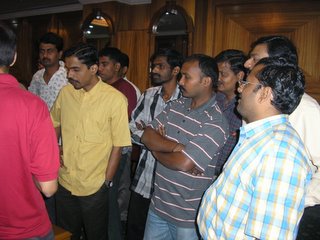
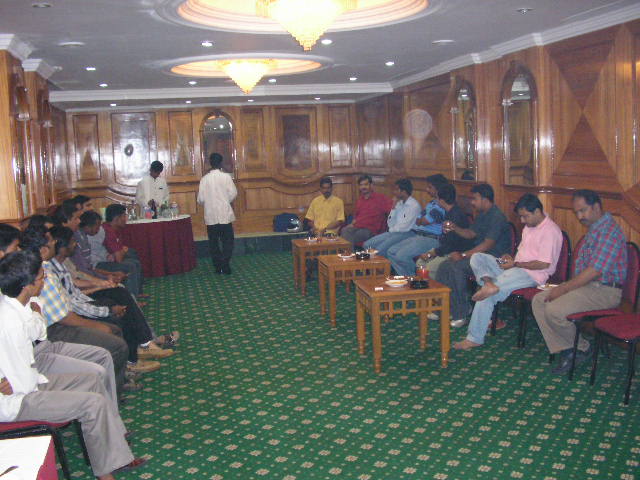
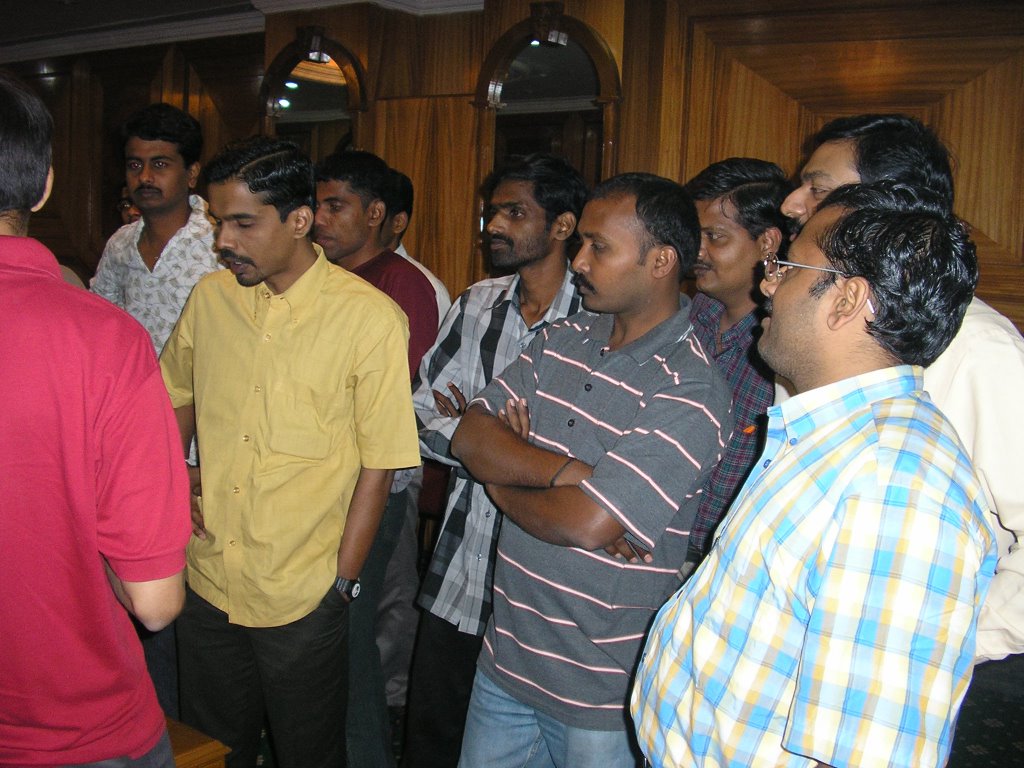
The farewell party to Satya was held at around 7 p.m. on 30th December 2005 at Hotel Ramada Raj Paris. It was good to see all the CI Chennaites together (except few). Everybody felt (rather feel) that it's really hard to miss him. Some took a chance to talk about their experience with him. He has been so nice, friendly and helpful to all of us.
We all whole-heartedly wish him a bright career for his new role.
Please find here, some of the snaps taken at the party.
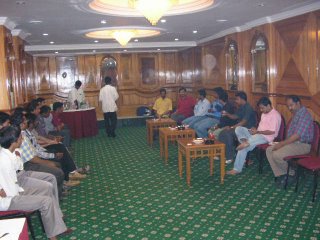
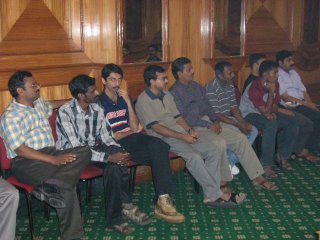
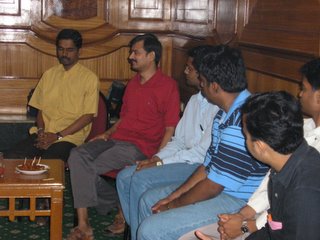
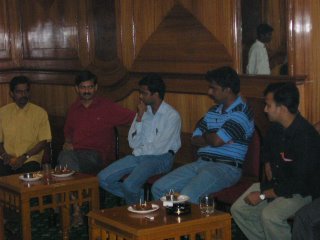

I could not blog about the farewell party on time, since I was really busy on certain official matters and am relaxed a bit now to talk about the farewell.
The farewell party to Satya was held at around 7 p.m. on 30th December 2005 at Hotel Ramada Raj Paris. It was good to see all the CI Chennaites together (except few). Everybody felt (rather feel) that it's really hard to miss him. Some took a chance to talk about their experience with him. He has been so nice, friendly and helpful to all of us.
We all whole-heartedly wish him a bright career for his new role.
Please find here, some of the snaps taken at the party.


Many more rich Indians than rich taxpayers!
The Government has gathered more intelligence on the extent of black money in the economy from the Annual Information Returns (AIRs) on high value transactions filed by various agencies with the Income-tax Department.
While official information is that the number of people with taxable income of Rs 10 lakh or more is just over 80,000, as per the AIRs, over three lakh Indians spent Rs 2 lakh or more in 2004-05 to buy Mutual Fund (MF) units.
Such transactions exceeded an aggregate value of Rs 7 lakh crore according to AIRs filed by funds. Banks have reported that nearly three lakh Indians deposited more than Rs 10 lakh in savings accounts, amounting to a total of Rs 42,000 crore in 2004-05.
As per information furnished by credit card issuers, more than two lakh people purchased goods/services priced at over Rs 2 lakh through credit cards in transactions that added up to Rs 5,000 crore. Significantly, the AIR data indicate that Indians' tendency to save in physical assets like gold and property, rather than in financial assets, may be on the wane.
Capital markets may still be used by less than 1% Indians, but many are investing aggressively in equity.
The Government has gathered more intelligence on the extent of black money in the economy from the Annual Information Returns (AIRs) on high value transactions filed by various agencies with the Income-tax Department.
While official information is that the number of people with taxable income of Rs 10 lakh or more is just over 80,000, as per the AIRs, over three lakh Indians spent Rs 2 lakh or more in 2004-05 to buy Mutual Fund (MF) units.
Such transactions exceeded an aggregate value of Rs 7 lakh crore according to AIRs filed by funds. Banks have reported that nearly three lakh Indians deposited more than Rs 10 lakh in savings accounts, amounting to a total of Rs 42,000 crore in 2004-05.
As per information furnished by credit card issuers, more than two lakh people purchased goods/services priced at over Rs 2 lakh through credit cards in transactions that added up to Rs 5,000 crore. Significantly, the AIR data indicate that Indians' tendency to save in physical assets like gold and property, rather than in financial assets, may be on the wane.
Capital markets may still be used by less than 1% Indians, but many are investing aggressively in equity.
Wednesday, January 11, 2006

Tuesday, January 03, 2006

Any problem with your bank ?
Do you face any problem with your banker ?
Are your queries to banks not attended properly ?
Here's the solution to reach the authority whose responsibilty is to take up your matter to the concerned bank official and get it attended.
Perhaps, you can try this and see how the response is.
Please find the advertisement which was carried on the newspapers.
Subscribe to:
Posts (Atom)