Subject: ESPN acquires Cricinfo effective from June 8, 2007
The Wisden Group has agreed to sell Cricinfo to ESPN, one of the world's leading multimedia providers of sports content and entertainment.
Cricinfo and ESPN have worked together for a number of years so there is an existing relationship between the two businesses.
They are delighted to be acquiring Cricinfo, as their existing, highly regarded online sports portfolio does not include a dedicated cricket site.
Cricinfo has developed and flourished over the last three or four years and we are a strong and successful business.
The Wisden Group board has decided to sell now because they believe that Cricinfo will flourish in an environment dedicated to sports broadcasting and entertainment.
Also that Cricinfo can be an important element of ESPN's international development and sees fantastic benefits for Cricinfo in terms of content as well as in terms of expertise and experience in our core business.
ESPN is a multinational business with offices around the world, but for the immediate future Cricinfo offices will continue to operate normally and there will be no changes to the day-to-day running of the business.
Friday, June 15, 2007


Launch of NFO "Reliance Equity Advantage Fund- An open-ended Diversified Equity Scheme "
NFO dates
Opens on: 12th June 07
Closes on: 10th July 07A brief on the product...
Sector weightage of Reliance Equity Advantage Fund will mirror exactly that of Nifty on a
Monthly basis.
80% of stocks within each sector will be constituents of Nifty, though not necessarily with their Nifty weights
20% of stocks can be non-Nifty in each sector to provide the additional Alpha possibilities and opportunities
Flexibility of going short exists, but on a net basis sector weightages will be maintained in line with Nifty
NFO dates
Opens on: 12th June 07
Closes on: 10th July 07A brief on the product...
Sector weightage of Reliance Equity Advantage Fund will mirror exactly that of Nifty on a
Monthly basis.
80% of stocks within each sector will be constituents of Nifty, though not necessarily with their Nifty weights
20% of stocks can be non-Nifty in each sector to provide the additional Alpha possibilities and opportunities
Flexibility of going short exists, but on a net basis sector weightages will be maintained in line with Nifty
Monday, July 10, 2006
I read this article on rediff and thought of blogging the same, perhaps for the reason that it supports accountants :-)
Tax deduction? Not the Accountant’s fault
If you are a salaried person, you are likely to be fretting about your employer deducting large chunks from your salary as TDS (tax deduction at source). Every year, your employer's accountant would nag you about tax saving investments made.
Unfair, did you say? It is not entirely so. The employer has his reasons to be officious. Under the Income Tax Act, it is the duty of an employer to deduct tax from the salary paid to its employee. Whether the employer is an individual, a partnership firm, a trust or a company, they have to deduct tax at source from salary. The status of the employer is not relevant.
Now, the IT Act lays down elaborate steps to be followed by an employer while deducting the tax (popularly known as TDS) from the salaries. There are various constraints on the employer.
To start with, there are deadlines for TDS payment to the government; for issuing the TDS certificates (Form 16) to the employees; for filing quarterly e-TDS returns, and many more of such legalities. Plus, there are various penalties and interests that an employer has to pay if there is a default. These detailed procedures might in part explain why most employers are paranoid when it comes to TDS.
The Process
To calculate the TDS for each employee, an employer typically follows these steps:
Estimating the gross salary for the entire year;
Estimating the exemptions from the salary income;
Adding any other income, declared by the employee;
Calculating the amounts of deductions from the salary income based on the declaration given by the employee;
Calculating the tax on the net income of the employee;
Deducting the tax equally over 12 months of the year;
Paying TDS to the government every month by the 7th of next month, filing e-TDS return every quarter;
Issue Form 16 (TDS certificate) to each employee.
Estimating the exemptions from the salary income;
Adding any other income, declared by the employee;
Calculating the amounts of deductions from the salary income based on the declaration given by the employee;
Calculating the tax on the net income of the employee;
Deducting the tax equally over 12 months of the year;
Paying TDS to the government every month by the 7th of next month, filing e-TDS return every quarter;
Issue Form 16 (TDS certificate) to each employee.
Computing salary income:
To compute total income under the head of 'income from salaries', there are various items of income that form part of salary. Salary includes the basic salary, advance salary, the wages, pension, fees, commissions, bonus, taxable gratuity, leave salary, leave encashment salary (not otherwise exempt), profits in lieu of salary, taxable house rent allowance and other taxable allowances.
Not all allowances and perquisites received by an employee are liable to income tax. Some of the allowances and perquisites are totally exempt from income tax, some are partially exempt, while others are fully taxable. There are separate limits and conditions for exemptions for various allowances.
For example, house rent allowance (HRA), leave travel allowance (LTA), medical reimbursements, conveyance allowance each have a different limit and a different set of rules. An employer has to apply each set of rules and limits before deciding what is exempt and what is not.
Tax to be evenly deducted:
What is important for an employee to understand is that the employer is supposed to deduct tax equally over the entire 12 months. Thus, if the total tax to be deducted from the salary for the year is Rs 12,000, then the employer is supposed to deduct Rs 1,000 every month and pay that to the government. If he fails in this, he is penalised.
TDS on other income:
A salaried person is also liable to pay income tax on income from other sources like interest, capital gains and rental income. These are computed under different sections of the Income Tax Act. An employee has the option of declaring his other income to the employer, so that the tax on that income can also get deducted from the salary income. By doing so, the employee can avoid the formalities of paying advance tax (which would have to be paid if the tax is not deducted at source).
Deductions allowed:
After the gross salary is calculated and the exemptions given, the deductions under Section 16 of the IT Act have to be made. Earlier, employees were entitled to standard deduction. Now, that is no longer available. The only deduction remaining is dues paid as professional tax. The balance figure is the amount of taxable salary.
From the taxable salary, the employer can then reduce the deductions permissible under Chapter VI-A of the Income Tax Act. Simply put, he will allow the following deductions:
Under Section 80C: for the various tax saving investments like PPF, life insurance premium, among others.
Under Section 80CCC: for investments in pension schemes by life insurers.
Under Section 80D: for mediclaim premium.
Under Section 80DD: expenses incurred for medical treatment or amount deposited under any scheme framed by the LIC/UTI approved insurer/administrator, for a dependant with ordinary disability or severe disability.
Under Section 80E: interest on loans for education.
Under Section 80GG: for house rent paid.
Under Section 80U: a deduction of Rs 50,000 in respect of a person who at any time during the previous year is certified by a medical authority to be a person with a disability.
Under Section 80CCC: for investments in pension schemes by life insurers.
Under Section 80D: for mediclaim premium.
Under Section 80DD: expenses incurred for medical treatment or amount deposited under any scheme framed by the LIC/UTI approved insurer/administrator, for a dependant with ordinary disability or severe disability.
Under Section 80E: interest on loans for education.
Under Section 80GG: for house rent paid.
Under Section 80U: a deduction of Rs 50,000 in respect of a person who at any time during the previous year is certified by a medical authority to be a person with a disability.
Another important deduction that an employer is allowed to make from the income pertains to the interest on housing loans up to a maximum of Rs 1.5 lakh per year. Of course, for this, just as for other deductions, the employee would have to furnish proof to the employer. It may be noted that there are limits laid down in the
Income Tax Act for each of these sections.
Deductions not allowed:
One important point to be noted here is that although a taxpayer may be entitled to several deductions from his income for the purpose of TDS from salary, the employer cannot reduce all the deductions.
He can give credit only for those deductions that are mentioned in the annual circular issued by the government. Thus, a taxpayer may have given a donation to say, CRY and for this, he would be entitled to deduction under Section 80G. However, while calculating TDS from salary, the employer is not allowed to take this into consideration. As far as donations are concerned, an employer is allowed to take into consideration only donations given to the Prime Minister's Relief Fund and a few other similar donations.
The employer has to then calculate the tax payable on this income and deduct this tax in equal monthly installments. Tax is to be deducted by the employer at the time of payment of salary or at the time of credit of the salary whichever is earlier. Tax will be deducted only if the total income of the employee exceeds the threshold limit of Rs 1 lakh in case of male employees, Rs 1.35 lakh in case of female employees and Rs 1.85 lakh in the case of senior citizens.
One-time payments:
In some situations, one-time payments are made during the year -- for example, bonus, incentives, joining bonus, and the like. The tax payable on such an amount would be deducted immediately. For example, if an employee is in the top tax bracket (that is 30 per cent) and his income is more than Rs 10 lakh, and gets a Diwali bonus of Rs 1 lakh, then the employer would deduct Rs 33,660 (Rs 30,000 as tax and Rs 3,000 as surcharge at 10 per cent on the tax and Rs 660 as education cess at 2 per cent on the tax plus surcharge) from the bonus/increment and pay the net amount to him.
If the employer fails to deduct the whole or any part of the TDS, then he shall be liable to pay simple interest at 12 per cent on the amount not deducted or short deducted.
The Timing
After the tax is deducted, the employer has to pay it to the government within 7 days from the end of the month. At the end of the year, the employer has to issue the salary certificate to the employee. While doing this, the employer has to quote the correct permanent account number (PAN) of the employee in the certificate. If the correct PAN is not quoted or if the same is not quoted at all then the employer is penalised.
So if you were thinking that the nosy accountants in your office were too eager to hack your salary to pay to the government, you have to give them the benefit of doubt. Deducting tax from salary is as painful, if not more, for the employer as it is to the employee.
Monday, June 05, 2006
Comments regarding removal or continuance of exemptions and deductions under the Income Tax Act, 1961.
Government is committed to simplify the tax laws, minimize the distortions within the tax structure and broaden the tax base. In this context, tax incentives in the form of various exemptions and deductions are being reviewed. Government is keen to involve all stakeholders in this exercise.
Accordingly, existing exemptions and deductions under the Income Tax Act, 1961 are listed below and comments with supporting rationale for their removal or continuance may be sent by e-mail or post by 5th July , 2006 to:
Ms. Anita Kapur, Joint Secretary, TPL-I, Room No. 147-B/I, North Block, New Delhi.
e-mail: jstpl1@nic.in or
Ms. Monica Bhatia, Director, TPL-I, Room No. 147-D, North Block, New Delhi.
e-mail: dirtpl1@nic.in or
Ms. Pragya S. Saxena, Director, TPL-II, Room No. 147-E, North Block, New Delhi.
e-mail: dirtpl2@nic.in
Government is committed to simplify the tax laws, minimize the distortions within the tax structure and broaden the tax base. In this context, tax incentives in the form of various exemptions and deductions are being reviewed. Government is keen to involve all stakeholders in this exercise.
Accordingly, existing exemptions and deductions under the Income Tax Act, 1961 are listed below and comments with supporting rationale for their removal or continuance may be sent by e-mail or post by 5th July , 2006 to:
Ms. Anita Kapur, Joint Secretary, TPL-I, Room No. 147-B/I, North Block, New Delhi.
e-mail: jstpl1@nic.in or
Ms. Monica Bhatia, Director, TPL-I, Room No. 147-D, North Block, New Delhi.
e-mail: dirtpl1@nic.in or
Ms. Pragya S. Saxena, Director, TPL-II, Room No. 147-E, North Block, New Delhi.
e-mail: dirtpl2@nic.in
For those who have not come across this news, here it is - an article on The Hindu
New income-tax return form introduced
New form seeks to capture not only assessee's income but also expenditure during financial year under assessment.
· Out goes existing "Saral"; new form to reflect actual cash flow of the assessee
· Option of filing electronic or hard copy return this year; only electronic from next year
In place of the existing one-page "Saral" form for filing income-tax (I-T) returns, the Union Government on Friday introduced a new four-page form ("Form 2F") which seeks to capture the assessee's income as well as expenditure for the entire financial year.
With the objective of tracking tax evasion, the new form has ample space for providing a detailed cash-flow statement. Henceforth I-T assessees will have to mention their cash balance in bank accounts at the beginning and end of the financial year under assessment.
Addressing a press conference here, Revenue Secretary K. M. Chandrasekhar claimed that the new form was self-explanatory and easy to fill up, even as the assessees would have to provide information about the investments made and expenses incurred during the year as also loans secured and gifts received during the period.
Elaborating further, Mr. Chandrasekhar said that the deduction of outgoings of the tax assessees by way of their expenses and investments from receipts, including the opening cash balance, bank balance, income, gifts and other receipts, would provide the cash balance and balance in banks at the close of the year.
"It [the new form] will reflect the actual expenditure and cash inflow of an individual. The assessee will also have to give the opening and closing balance and the two will need to be matched," he said.
According to senior tax officials, if the amounts (opening and closing balance in banks) "roughly" matched the data provided by third parties through annual information returns (AIRs), banking cash transaction tax (BCTT) and field officers, the need for any further scrutiny and investigation would not arise.
I-T Department officials maintained that the cash-flow statement would not be an intrusion into the households of the I-T assessees as only the lump sum amount of household expenses would be required to be filled up without any details.
Mr. Chandrasekhar also made it clear that the cash-flow statement, to be furnished under Schedule 5 of the new form, was optional for the current assessment year, but would be mandatory from 2007-08. The new format, he said, would make the task of filing returns simpler with little or no help from taxation experts.
The new form, Mr. Chandrasekhar claimed, would benefit honest taxpayers as no annexures such as details of total income, "Form 16" providing details of tax deducted at source (TDS) would be necessary along with it.
He noted that while the assessees had the option of filing the I-T return electronically or by way of a hard copy for this assessment year, it would be accepted only in electronic form from next year.
For the current assessment year, however, taxpayers have the option of using the one-page Saral form (Form 2E) till July 31, 2006, the last date for filing I-T returns. This, he said, was to allow sufficient time to taxpayers to familiarise themselves with the new form. "The new form," Mr. Chandrasekhar said, "can be used by resident individuals and Hindu undivided families (HUFs) who do not have (a) profits and gains of business or profession, (b) short-term capital gains, (c) agriculture income, (d) more than one house/property, or (e) any claim for relief under Section 89 in respect of arrears or advance of salary.''
New income-tax return form introduced
New form seeks to capture not only assessee's income but also expenditure during financial year under assessment.
· Out goes existing "Saral"; new form to reflect actual cash flow of the assessee
· Option of filing electronic or hard copy return this year; only electronic from next year
In place of the existing one-page "Saral" form for filing income-tax (I-T) returns, the Union Government on Friday introduced a new four-page form ("Form 2F") which seeks to capture the assessee's income as well as expenditure for the entire financial year.
With the objective of tracking tax evasion, the new form has ample space for providing a detailed cash-flow statement. Henceforth I-T assessees will have to mention their cash balance in bank accounts at the beginning and end of the financial year under assessment.
Addressing a press conference here, Revenue Secretary K. M. Chandrasekhar claimed that the new form was self-explanatory and easy to fill up, even as the assessees would have to provide information about the investments made and expenses incurred during the year as also loans secured and gifts received during the period.
Elaborating further, Mr. Chandrasekhar said that the deduction of outgoings of the tax assessees by way of their expenses and investments from receipts, including the opening cash balance, bank balance, income, gifts and other receipts, would provide the cash balance and balance in banks at the close of the year.
"It [the new form] will reflect the actual expenditure and cash inflow of an individual. The assessee will also have to give the opening and closing balance and the two will need to be matched," he said.
According to senior tax officials, if the amounts (opening and closing balance in banks) "roughly" matched the data provided by third parties through annual information returns (AIRs), banking cash transaction tax (BCTT) and field officers, the need for any further scrutiny and investigation would not arise.
I-T Department officials maintained that the cash-flow statement would not be an intrusion into the households of the I-T assessees as only the lump sum amount of household expenses would be required to be filled up without any details.
Mr. Chandrasekhar also made it clear that the cash-flow statement, to be furnished under Schedule 5 of the new form, was optional for the current assessment year, but would be mandatory from 2007-08. The new format, he said, would make the task of filing returns simpler with little or no help from taxation experts.
The new form, Mr. Chandrasekhar claimed, would benefit honest taxpayers as no annexures such as details of total income, "Form 16" providing details of tax deducted at source (TDS) would be necessary along with it.
He noted that while the assessees had the option of filing the I-T return electronically or by way of a hard copy for this assessment year, it would be accepted only in electronic form from next year.
For the current assessment year, however, taxpayers have the option of using the one-page Saral form (Form 2E) till July 31, 2006, the last date for filing I-T returns. This, he said, was to allow sufficient time to taxpayers to familiarise themselves with the new form. "The new form," Mr. Chandrasekhar said, "can be used by resident individuals and Hindu undivided families (HUFs) who do not have (a) profits and gains of business or profession, (b) short-term capital gains, (c) agriculture income, (d) more than one house/property, or (e) any claim for relief under Section 89 in respect of arrears or advance of salary.''
Monday, February 13, 2006
Water !! Water !!
I received this content from one of my friends and thought would be useful.
Drink six (6) glasses of water (1.5 liters) everyday and avoid medicine, tablets, injections, diagnosis, doctor fees, etc. You can never believe before practicing.
List of Diseases That Can Be Cured By Water Therapy
Blood Pressure / Hypertension
Anemia (Blood Shortage)
Rheumatism (Pain in joints / muscles)
General Paralysis
Obesity
Arthritis
Sinusitis
Tachycardia
Giddiness
Cough
Leukemia
Asthma
Bronchitis
Pulmonary Tuberculosis
Meningitis
Kidney Stones
Hyper Acidity
Dysentry
Gastroenteritis
Uterus Cancer
Rectal Piodapse
Constipation
Hostorthobics
Diabetes
Eye Diseases
Ophthalmic Hemorrhage & Opthalmia (Reddisheye)
Irregular Menstruation
Breast Cancer
Laryngitis
Headache
Leukemia
Urogenital Diseases
Therapy Procedure
Early morning, after you get up from bed, (without even brushing your teeth) drink 1.5 liters of water i.e., 5 to 6 glasses. Let us all know that ancient Indians termed this therapy as "Usha Paana Chikitsa" . You may wash your face thereafter.
Here it is very essential to note that nothing else, neither drinks nor solid food of any sort should be taken within 1 hour before and after drinking these 1.5 liters of water.
It is also to be strictly observed that no alcoholic drinks should be taken the previous night.
If required, boiled and filtered water may be used for this purpose.
It is difficult to drink 1.5 liters of water at one time, but you will get used to it gradually.
Initially, while practicing you may drink four glasses first and to balance two glasses after a gap of two minutes.
You may find the necessity to urinate 2 to 3 times within an hour, but it will become normal after quite some time.
By Research and Experience
The following diseases are observed to be cured with this therapy within the indicated days as below:
Constipation - 1 day
Acidity - 2 days
Diabetes - 7 days
Cancer - 4 weeks
Pulmonary TB - 3 months
BP & Hypertension - 4 weeks
Note:
It is advised that persons suffering from Arthritis or Rheumatism should practice this therapy thrice a day, i.e. morning, midday and night, 1 hour before meals for one week; and twice a day subsequently until the disease disappears.
How Does Pure Water Act?
Consuming ordinary drinking water by the right method purifies human body. It renders the colon more effective by forming new fresh blood, known in medical terms as "Haematopaises". That the mucous folds of the colon and intestines are activated by this method is an undisputed fact, just as the theory that the mucous fold produces new fresh blood.
If the colon is cleansed then the nutrients of the food taken several times a day will be absorbed and by the action of the mucous folds they are turned into fresh blood. The blood is all-important in curing ailments and restoring health and for this water should be consumed in a regular pattern.
Life is Short, Just go for it
Please spread this message to your friends, relatives and neighbors. It is a great service to the cause of humanity.
I received this content from one of my friends and thought would be useful.
Drink six (6) glasses of water (1.5 liters) everyday and avoid medicine, tablets, injections, diagnosis, doctor fees, etc. You can never believe before practicing.
List of Diseases That Can Be Cured By Water Therapy
Blood Pressure / Hypertension
Anemia (Blood Shortage)
Rheumatism (Pain in joints / muscles)
General Paralysis
Obesity
Arthritis
Sinusitis
Tachycardia
Giddiness
Cough
Leukemia
Asthma
Bronchitis
Pulmonary Tuberculosis
Meningitis
Kidney Stones
Hyper Acidity
Dysentry
Gastroenteritis
Uterus Cancer
Rectal Piodapse
Constipation
Hostorthobics
Diabetes
Eye Diseases
Ophthalmic Hemorrhage & Opthalmia (Reddisheye)
Irregular Menstruation
Breast Cancer
Laryngitis
Headache
Leukemia
Urogenital Diseases
Therapy Procedure
Early morning, after you get up from bed, (without even brushing your teeth) drink 1.5 liters of water i.e., 5 to 6 glasses. Let us all know that ancient Indians termed this therapy as "Usha Paana Chikitsa" . You may wash your face thereafter.
Here it is very essential to note that nothing else, neither drinks nor solid food of any sort should be taken within 1 hour before and after drinking these 1.5 liters of water.
It is also to be strictly observed that no alcoholic drinks should be taken the previous night.
If required, boiled and filtered water may be used for this purpose.
It is difficult to drink 1.5 liters of water at one time, but you will get used to it gradually.
Initially, while practicing you may drink four glasses first and to balance two glasses after a gap of two minutes.
You may find the necessity to urinate 2 to 3 times within an hour, but it will become normal after quite some time.
By Research and Experience
The following diseases are observed to be cured with this therapy within the indicated days as below:
Constipation - 1 day
Acidity - 2 days
Diabetes - 7 days
Cancer - 4 weeks
Pulmonary TB - 3 months
BP & Hypertension - 4 weeks
Note:
It is advised that persons suffering from Arthritis or Rheumatism should practice this therapy thrice a day, i.e. morning, midday and night, 1 hour before meals for one week; and twice a day subsequently until the disease disappears.
How Does Pure Water Act?
Consuming ordinary drinking water by the right method purifies human body. It renders the colon more effective by forming new fresh blood, known in medical terms as "Haematopaises". That the mucous folds of the colon and intestines are activated by this method is an undisputed fact, just as the theory that the mucous fold produces new fresh blood.
If the colon is cleansed then the nutrients of the food taken several times a day will be absorbed and by the action of the mucous folds they are turned into fresh blood. The blood is all-important in curing ailments and restoring health and for this water should be consumed in a regular pattern.
Life is Short, Just go for it
Please spread this message to your friends, relatives and neighbors. It is a great service to the cause of humanity.
Thursday, January 19, 2006
Letter to the editor of ‘Business & Economy'
Surprised to note that my letter to Mr. Arindham Chaudhuri, the Editor-in-Chief of the magazine - ‘Business & Economy’ has been published in their latest issue dated 13th January 2006.
Here’s the content of my letter.
Taxing Times:
I would like to appreciate your team's hard efforts for presenting such a nice magazine. The topics in the magazine are very enlightening & educative and they are delivered impressively.
For the magazine to shine brighter, I would like to suggest something. I have noticed that every earning citizen is worried about Income Tax and most of them question its payment while others who pay, don’t know how to save tax. If you could do something about this, I think that would help people to a large extent. Also, you should create an IT query clarification forum and help the masses clear off their queries.
I strongly feel that this step would help you to reach a majority of this section.
Surprised to note that my letter to Mr. Arindham Chaudhuri, the Editor-in-Chief of the magazine - ‘Business & Economy’ has been published in their latest issue dated 13th January 2006.
Here’s the content of my letter.
Taxing Times:
I would like to appreciate your team's hard efforts for presenting such a nice magazine. The topics in the magazine are very enlightening & educative and they are delivered impressively.
For the magazine to shine brighter, I would like to suggest something. I have noticed that every earning citizen is worried about Income Tax and most of them question its payment while others who pay, don’t know how to save tax. If you could do something about this, I think that would help people to a large extent. Also, you should create an IT query clarification forum and help the masses clear off their queries.
I strongly feel that this step would help you to reach a majority of this section.
Tuesday, January 17, 2006
Service tax net to be cast over online ads
The Central Board of Excise and Customs (CBEC) is set to impose the 10.2% service tax on sale of cyber space by websites to advertisers.
The move follows a recent ruling by the Authority for Advance Ruling that Google Online India Pvt. Ltd, the Indian arm of the US-based search engine, is liable to pay service tax while selling space on the Net.
Though the authority is a quasi judicial agency and its ruling is merely binding on the party concerned, revenue department sources said the CBEC now planned to make the authority's opinion a norm and tax all cyber space sale by websites to advertisers.
The turnover of the online advertisement industry in India is estimated to grow over 50% to Rs. 162 crore in 2005-06. This is, however, just about 2% of the size of the total advertisement pie.
Mr.Alok Kejriwal, CEO, contests2win, said, the move would bring in a level-playing field. "Because of the difference in service tax implications earlier, some online publishers would seem less expensive if bought directly rather than being routed though a full media services agency," he said.
Mr.Krishna Kumar, head, Media2win, an online media planning agency, said it would remove the anomalies that existed in the medium. "It brings the online industry on a par with other broadcast medium," he said.
The revenue department sources said, the move would be akin to bringing all advertisement in electronic media, including Internet advertisements, under the tax net.
The Central Board of Excise and Customs (CBEC) is set to impose the 10.2% service tax on sale of cyber space by websites to advertisers.
The move follows a recent ruling by the Authority for Advance Ruling that Google Online India Pvt. Ltd, the Indian arm of the US-based search engine, is liable to pay service tax while selling space on the Net.
Though the authority is a quasi judicial agency and its ruling is merely binding on the party concerned, revenue department sources said the CBEC now planned to make the authority's opinion a norm and tax all cyber space sale by websites to advertisers.
The turnover of the online advertisement industry in India is estimated to grow over 50% to Rs. 162 crore in 2005-06. This is, however, just about 2% of the size of the total advertisement pie.
Mr.Alok Kejriwal, CEO, contests2win, said, the move would bring in a level-playing field. "Because of the difference in service tax implications earlier, some online publishers would seem less expensive if bought directly rather than being routed though a full media services agency," he said.
Mr.Krishna Kumar, head, Media2win, an online media planning agency, said it would remove the anomalies that existed in the medium. "It brings the online industry on a par with other broadcast medium," he said.
The revenue department sources said, the move would be akin to bringing all advertisement in electronic media, including Internet advertisements, under the tax net.
Friday, January 13, 2006
Farewell to Satya
I could not blog about the farewell party on time, since I was really busy on certain official matters and am relaxed a bit now to talk about the farewell.
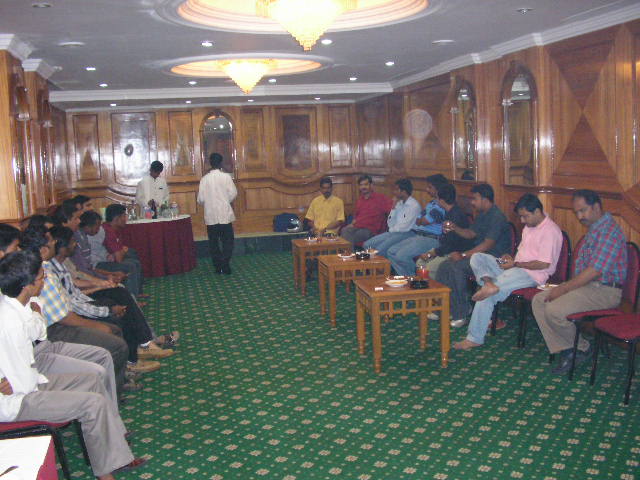
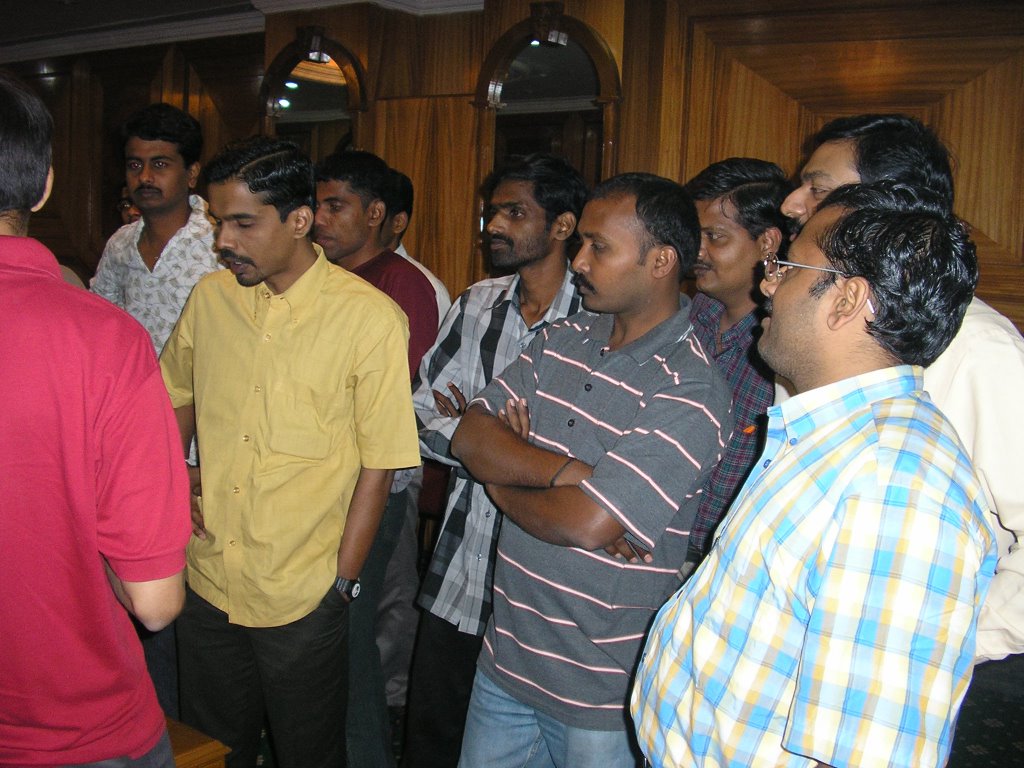
The farewell party to Satya was held at around 7 p.m. on 30th December 2005 at Hotel Ramada Raj Paris. It was good to see all the CI Chennaites together (except few). Everybody felt (rather feel) that it's really hard to miss him. Some took a chance to talk about their experience with him. He has been so nice, friendly and helpful to all of us.
We all whole-heartedly wish him a bright career for his new role.
Please find here, some of the snaps taken at the party.
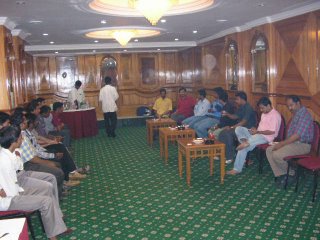
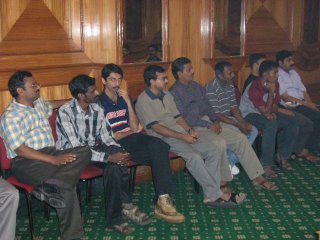
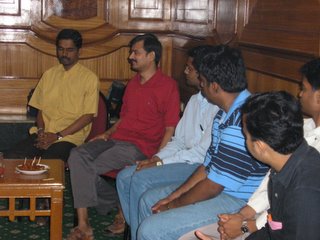
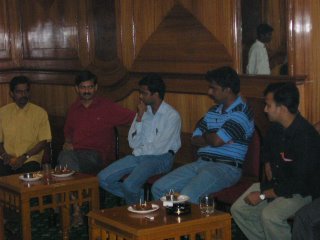


I could not blog about the farewell party on time, since I was really busy on certain official matters and am relaxed a bit now to talk about the farewell.
The farewell party to Satya was held at around 7 p.m. on 30th December 2005 at Hotel Ramada Raj Paris. It was good to see all the CI Chennaites together (except few). Everybody felt (rather feel) that it's really hard to miss him. Some took a chance to talk about their experience with him. He has been so nice, friendly and helpful to all of us.
We all whole-heartedly wish him a bright career for his new role.
Please find here, some of the snaps taken at the party.


Many more rich Indians than rich taxpayers!
The Government has gathered more intelligence on the extent of black money in the economy from the Annual Information Returns (AIRs) on high value transactions filed by various agencies with the Income-tax Department.
While official information is that the number of people with taxable income of Rs 10 lakh or more is just over 80,000, as per the AIRs, over three lakh Indians spent Rs 2 lakh or more in 2004-05 to buy Mutual Fund (MF) units.
Such transactions exceeded an aggregate value of Rs 7 lakh crore according to AIRs filed by funds. Banks have reported that nearly three lakh Indians deposited more than Rs 10 lakh in savings accounts, amounting to a total of Rs 42,000 crore in 2004-05.
As per information furnished by credit card issuers, more than two lakh people purchased goods/services priced at over Rs 2 lakh through credit cards in transactions that added up to Rs 5,000 crore. Significantly, the AIR data indicate that Indians' tendency to save in physical assets like gold and property, rather than in financial assets, may be on the wane.
Capital markets may still be used by less than 1% Indians, but many are investing aggressively in equity.
The Government has gathered more intelligence on the extent of black money in the economy from the Annual Information Returns (AIRs) on high value transactions filed by various agencies with the Income-tax Department.
While official information is that the number of people with taxable income of Rs 10 lakh or more is just over 80,000, as per the AIRs, over three lakh Indians spent Rs 2 lakh or more in 2004-05 to buy Mutual Fund (MF) units.
Such transactions exceeded an aggregate value of Rs 7 lakh crore according to AIRs filed by funds. Banks have reported that nearly three lakh Indians deposited more than Rs 10 lakh in savings accounts, amounting to a total of Rs 42,000 crore in 2004-05.
As per information furnished by credit card issuers, more than two lakh people purchased goods/services priced at over Rs 2 lakh through credit cards in transactions that added up to Rs 5,000 crore. Significantly, the AIR data indicate that Indians' tendency to save in physical assets like gold and property, rather than in financial assets, may be on the wane.
Capital markets may still be used by less than 1% Indians, but many are investing aggressively in equity.
Wednesday, January 11, 2006

Tuesday, January 03, 2006

Any problem with your bank ?
Do you face any problem with your banker ?
Are your queries to banks not attended properly ?
Here's the solution to reach the authority whose responsibilty is to take up your matter to the concerned bank official and get it attended.
Perhaps, you can try this and see how the response is.
Please find the advertisement which was carried on the newspapers.
Monday, January 02, 2006
Suggestion to raise basic tax exemption limit to Rs 1.5 lakh: PHDCCI
The PHD Chamber of Commerce and Industry has urged the Government to restructure the income-tax slabs and increase the basic exemption limit for income-tax to Rs 1.5 lakh.
In its pre-budget memorandum submitted to the Finance Ministry, the chamber has said the slabs of income on which tax is levied at different rates are in a very narrow range and need to be restructured keeping in view the ground realities, including inflation.
The Chamber has said that in India, the income level on which tax at maximum marginal rate is levied is far lower than income level on which maximum marginal rates are levied in a large number of developing and emerging economies.
Even if the purchase parity of the rupee forms the basis, the cost of some of the basic necessities in metropolitan cities in India, such as housing, energy, transport, food products, medical care, etc, are comparable with that in most of the advanced countries.
This disparity must be redressed. The maximum marginal rate of 30 per cent should be made applicable to incomes exceeding Rs 5,00,000 instead of the present level of Rs 2,50,000.
The chamber has further urged the Government to reintroduce standard deduction under the Income Tax Act as salaried individuals cannot claim other relief that are allowed to business class assessees.
By allowing a deduction for genuine cost of earning to the employees, standard deduction had been a step to ensure equity amongst salary earners vis-à-vis persons drawing income from other sources such as business or profession.
The PHD Chamber of Commerce and Industry has urged the Government to restructure the income-tax slabs and increase the basic exemption limit for income-tax to Rs 1.5 lakh.
In its pre-budget memorandum submitted to the Finance Ministry, the chamber has said the slabs of income on which tax is levied at different rates are in a very narrow range and need to be restructured keeping in view the ground realities, including inflation.
The Chamber has said that in India, the income level on which tax at maximum marginal rate is levied is far lower than income level on which maximum marginal rates are levied in a large number of developing and emerging economies.
Even if the purchase parity of the rupee forms the basis, the cost of some of the basic necessities in metropolitan cities in India, such as housing, energy, transport, food products, medical care, etc, are comparable with that in most of the advanced countries.
This disparity must be redressed. The maximum marginal rate of 30 per cent should be made applicable to incomes exceeding Rs 5,00,000 instead of the present level of Rs 2,50,000.
The chamber has further urged the Government to reintroduce standard deduction under the Income Tax Act as salaried individuals cannot claim other relief that are allowed to business class assessees.
By allowing a deduction for genuine cost of earning to the employees, standard deduction had been a step to ensure equity amongst salary earners vis-à-vis persons drawing income from other sources such as business or profession.
Thursday, December 29, 2005
Tax net may get wider for credit card services
The Central Board of Excise and Customs is examining the possibility of making a case for charging service tax with retrospective effect from 2001 on "service charges" and "commissions" received by banks on services rendered in relation to credit cards.
According to officials, several banks including American Express, SBI, Standard Chartered, ICICI and HSBC could come under the scanner of the revenue department regarding the collection of such charges.
The argument of the department is that service charges recovered by the banks on account of swiping of credit cards and commissions received by the visa or master cards or the card issuing bank fall in the category of services.
These are, therefore, amenable to service tax under the category of "banking and financial services" with effect from July 2001, they said.
The Indian Banks' Association has already expressed to the government its opposition to the proposal.
"Technically, this is a sort of funding arrangement with merchant establishments. Besides, this was not mentioned in the coverage of service tax at the time the circular was issued by the government. It is not a fee that banks are receiving during their dealings with customers," sources said.
So, next time when you pay service charge for swiping your credit card, you might face an additional charge of 10.2 % towards service tax.
The Central Board of Excise and Customs is examining the possibility of making a case for charging service tax with retrospective effect from 2001 on "service charges" and "commissions" received by banks on services rendered in relation to credit cards.
According to officials, several banks including American Express, SBI, Standard Chartered, ICICI and HSBC could come under the scanner of the revenue department regarding the collection of such charges.
The argument of the department is that service charges recovered by the banks on account of swiping of credit cards and commissions received by the visa or master cards or the card issuing bank fall in the category of services.
These are, therefore, amenable to service tax under the category of "banking and financial services" with effect from July 2001, they said.
The Indian Banks' Association has already expressed to the government its opposition to the proposal.
"Technically, this is a sort of funding arrangement with merchant establishments. Besides, this was not mentioned in the coverage of service tax at the time the circular was issued by the government. It is not a fee that banks are receiving during their dealings with customers," sources said.
So, next time when you pay service charge for swiping your credit card, you might face an additional charge of 10.2 % towards service tax.
Friday, December 23, 2005
Non-acceptance of Small Coins is an offence: clarifies RBI
The Reserve Bank of India has come across reports that banks are reluctant to accept 50 paise and 25 paise coins.
A recent study conducted by the Reserve Bank through the Birla Institute of Technology (BITS), Pilani also suggests that similar reluctance is exhibited by shopkeepers and traders.
The Reserve Bank of India states categorically that all small denomination coins including those of 50 paise and 25 paise coins are legal tender and non-acceptance of any such coins is an offence.
The Reserve Bank has advised all banks to desist from any such restrictive practice. Members of public should assert their right to get appropriate change and acceptance of all denomination coins by banks in exchange.
The Reserve Bank of India has come across reports that banks are reluctant to accept 50 paise and 25 paise coins.
A recent study conducted by the Reserve Bank through the Birla Institute of Technology (BITS), Pilani also suggests that similar reluctance is exhibited by shopkeepers and traders.
The Reserve Bank of India states categorically that all small denomination coins including those of 50 paise and 25 paise coins are legal tender and non-acceptance of any such coins is an offence.
The Reserve Bank has advised all banks to desist from any such restrictive practice. Members of public should assert their right to get appropriate change and acceptance of all denomination coins by banks in exchange.
Search engines selling ad space may be taxed
The Authority for Advance Rulings has said that Google Online India Pvt Ltd, a wholly owned subsidiary of US-based Google International LLC, will have to pay service tax for selling advertisement space on its search site to Indian entities.
This can set a precedent for search engines with offices in India falling in the ambit of the tax. The advance ruling last week noted that the proposed activity of Google India to sell space on its site tantamount to providing a service to advertisers and clients. "From this angle, the applicant will be covered by the definition of advertising agency," it said. When contacted, Google executives said they were still examining the ruling and did not wish to comment on it.
A ruling by the advance authority is binding on the company with immediate effect unless it decides to appeal against the verdict. The search engine had approached the Advance Ruling Authority in August this year, seeking clarifications on whether providing selling space for advertisement on the Google website would be exempt from service tax or was classifiable as advertisement service, computer network service, business auxiliary service or any other taxable service.
In its application, Google had said the service it proposed to provide did not attract service tax.
The Authority for Advance Rulings has said that Google Online India Pvt Ltd, a wholly owned subsidiary of US-based Google International LLC, will have to pay service tax for selling advertisement space on its search site to Indian entities.
This can set a precedent for search engines with offices in India falling in the ambit of the tax. The advance ruling last week noted that the proposed activity of Google India to sell space on its site tantamount to providing a service to advertisers and clients. "From this angle, the applicant will be covered by the definition of advertising agency," it said. When contacted, Google executives said they were still examining the ruling and did not wish to comment on it.
A ruling by the advance authority is binding on the company with immediate effect unless it decides to appeal against the verdict. The search engine had approached the Advance Ruling Authority in August this year, seeking clarifications on whether providing selling space for advertisement on the Google website would be exempt from service tax or was classifiable as advertisement service, computer network service, business auxiliary service or any other taxable service.
In its application, Google had said the service it proposed to provide did not attract service tax.
Friday, December 09, 2005
Provident Fund interest rate dropped from 9.50% to 8.50%
The approximately four crore subscribers of the Employees Provident Fund Organisation (EPFO) will have to undergo a loss of one percentage interest, compared to last year, on their provident fund deposits.
The Central Board of Trustees (CBT) of EPFO on 7-12-2005 finally announced a 8.50% interest for provident fund deposits for 2005-06, against last year's 9.50%. The Labour Minister, Mr K. Chandrasekhar Rao, who is the Chairman of the EPFO, said that, even for paying 8.50% interest, there would be a shortfall of Rs 370 crore.
The Minister said he will not seek Government support for raising this Rs 370 crore but will look at ways of generating resources internally.
Though dropping of rate by 1% is not acceptable, I feel 8.50% is still a reasonable return for a guaranteed investment like this. The concerned department should look at investing the monies in large guaranteed securities which yield more returns so that higher benefits can be passed on to the mass.
The approximately four crore subscribers of the Employees Provident Fund Organisation (EPFO) will have to undergo a loss of one percentage interest, compared to last year, on their provident fund deposits.
The Central Board of Trustees (CBT) of EPFO on 7-12-2005 finally announced a 8.50% interest for provident fund deposits for 2005-06, against last year's 9.50%. The Labour Minister, Mr K. Chandrasekhar Rao, who is the Chairman of the EPFO, said that, even for paying 8.50% interest, there would be a shortfall of Rs 370 crore.
The Minister said he will not seek Government support for raising this Rs 370 crore but will look at ways of generating resources internally.
Though dropping of rate by 1% is not acceptable, I feel 8.50% is still a reasonable return for a guaranteed investment like this. The concerned department should look at investing the monies in large guaranteed securities which yield more returns so that higher benefits can be passed on to the mass.
Sunday, November 27, 2005
What is a Mutual Fund ?
A mutual fund is an entity which combines, or pools, investors' money and, generally, purchases stocks or bonds. Ideally, a fund's size and resultant efficiency, combined with experienced management, provide advantages for investors that include diversification, expert stock and bond selection, low costs, and convenience.
The assets of a mutual fund consist almost entirely of the securities it holds in its portfolio. The most common type of mutual fund, called an open-end fund, allows investors to buy and sell stock in it on an ongoing basis.
How it Works ?
The mutual fund issues shares of stock (just like any other corporation) to investors in exchange for cash. It is interesting to note that funds do not issue a pre-determined amount of stock, as do most corporations; new shares are issued as each new investment is made. Investors thus become part owners of the fund itself, and thereby the assets of the fund. The fund, in turn, uses investors' cash to purchase securities, such as stocks and bonds. As mentioned above, the primary assets of a fund are the securities it invests in (other assets, such as equipment, are a relatively small part of the total assets of a fund).
How to invest in Mutual Funds?
Here’s the list of five ways in which you can buy your fund units.
1. Get in touch with the Asset Management Company
The first step is to track the AMC -- as fund houses are known -- online.
Once you get onto their Web site, you will get their office addresses, phone numbers and a contact e-mail address. You will even be able to transact online with some of them.
Online addresses of the AMCs
ABN AMRO Mutual Fund
Benchmark Mutual Fund
Birla Sun Life Mutual Fund
BOB Mutual Fund
Canbank Mutual Fund
Chola Mutual Fund
Deutsche Mutual Fund
DSP Merrill Lynch Mutual Fund
Escorts Mutual Fund
Fidelity Mutual Fund
Franklin Templeton Mutual Fund
GIC Mutual Fund
HDFC Mutual Fund
HSBC Mutual Fund
ING Vysya Mutual Fund
J M Financial Mutual Fund
Kotak Mahindra Mutual Fund
LIC Mutual Fund
Morgan Stanley Mutual Fund
Principal Mutual Fund
Prudential ICICI Mutual Fund
Reliance Mutual Fund
Sahara Mutual Fund
SBI Mutual Fund
Standard Chartered Mutual Fund
Sundaram Mutual Fund
Tata Mutual Fund
Taurus Mutual Fund
UTI Mutual Fund
Invest online with the mutual fund
Some mutual fund Web sites allow you to invest online. However, you must check if you have an account with the banks they have partnered with.
For example, Prudential ICICI Mutual Fund allows you to buy funds online if you have a banking account with any of the following banks: Centurion Bank, HDFC Bank, ICICI Bank, IDBI Bank and UTI Bank.
You can buy units of SBI Mutual Fund's schemes only if you have an account with the State Bank of India or HDFC Bank.
Get in touch with the fund house
By going online, you will be able to locate the fund house's address and phone number (toll free number in some cases). You can call and request them to send an agent over.
Or, if you want, go over personally. Do make an appointment; you may end up wasting time if the person you want to speak to is not available.
Some, like Prudential ICICI Mutual Fund, have a form you can fill and submit online. Do so and they will send someone over to meet you.
2. Visit your bank
A number of banks are mutual fund agents.
Just walk into your branch and ask if they are selling any funds. See if they have a tie-up with the fund house you want to invest in.
3. Ask around
Ask your colleagues, neighbors, friends and relatives. Someone will know an agent. Just ask them for his contact details or ask that he get in touch with you.
4. Visit the AMFI website
The Web site of the Association of Mutual Funds in India has a list of mutual fund agents across the country.
Under the heading Investors Zone, you will find another one called ARN Search. This refers to the AMFI Registration Number.
Click on it and you will arrive at a search page. You can locate an agent in your vicinity by just putting in your PIN code or name of your city.
5. Check the online finance portals
Do you have an online trading account? Then you could check if they also sell mutual funds online.
If you do not have an online trading account and are considering opening one, you could look for a player that offers both.
Some like ICICI Direct sell funds online. But you must have a trading account with them. Others, like India Bulls and Motilal Oswal, do not have this facility online but if you call and leave your contact details, they will send an agent over.
Here are some of the prominent players.
5 paisa
Geojit Securities
HDFC Securities
ICICI Direct
India Bulls
InvestSmart Online
Investmentz.com
Kotak Street
Motilal Oswal
Sharekhan
A mutual fund is an entity which combines, or pools, investors' money and, generally, purchases stocks or bonds. Ideally, a fund's size and resultant efficiency, combined with experienced management, provide advantages for investors that include diversification, expert stock and bond selection, low costs, and convenience.
The assets of a mutual fund consist almost entirely of the securities it holds in its portfolio. The most common type of mutual fund, called an open-end fund, allows investors to buy and sell stock in it on an ongoing basis.
How it Works ?
The mutual fund issues shares of stock (just like any other corporation) to investors in exchange for cash. It is interesting to note that funds do not issue a pre-determined amount of stock, as do most corporations; new shares are issued as each new investment is made. Investors thus become part owners of the fund itself, and thereby the assets of the fund. The fund, in turn, uses investors' cash to purchase securities, such as stocks and bonds. As mentioned above, the primary assets of a fund are the securities it invests in (other assets, such as equipment, are a relatively small part of the total assets of a fund).
How to invest in Mutual Funds?
Here’s the list of five ways in which you can buy your fund units.
1. Get in touch with the Asset Management Company
The first step is to track the AMC -- as fund houses are known -- online.
Once you get onto their Web site, you will get their office addresses, phone numbers and a contact e-mail address. You will even be able to transact online with some of them.
Online addresses of the AMCs
ABN AMRO Mutual Fund
Benchmark Mutual Fund
Birla Sun Life Mutual Fund
BOB Mutual Fund
Canbank Mutual Fund
Chola Mutual Fund
Deutsche Mutual Fund
DSP Merrill Lynch Mutual Fund
Escorts Mutual Fund
Fidelity Mutual Fund
Franklin Templeton Mutual Fund
GIC Mutual Fund
HDFC Mutual Fund
HSBC Mutual Fund
ING Vysya Mutual Fund
J M Financial Mutual Fund
Kotak Mahindra Mutual Fund
LIC Mutual Fund
Morgan Stanley Mutual Fund
Principal Mutual Fund
Prudential ICICI Mutual Fund
Reliance Mutual Fund
Sahara Mutual Fund
SBI Mutual Fund
Standard Chartered Mutual Fund
Sundaram Mutual Fund
Tata Mutual Fund
Taurus Mutual Fund
UTI Mutual Fund
Invest online with the mutual fund
Some mutual fund Web sites allow you to invest online. However, you must check if you have an account with the banks they have partnered with.
For example, Prudential ICICI Mutual Fund allows you to buy funds online if you have a banking account with any of the following banks: Centurion Bank, HDFC Bank, ICICI Bank, IDBI Bank and UTI Bank.
You can buy units of SBI Mutual Fund's schemes only if you have an account with the State Bank of India or HDFC Bank.
Get in touch with the fund house
By going online, you will be able to locate the fund house's address and phone number (toll free number in some cases). You can call and request them to send an agent over.
Or, if you want, go over personally. Do make an appointment; you may end up wasting time if the person you want to speak to is not available.
Some, like Prudential ICICI Mutual Fund, have a form you can fill and submit online. Do so and they will send someone over to meet you.
2. Visit your bank
A number of banks are mutual fund agents.
Just walk into your branch and ask if they are selling any funds. See if they have a tie-up with the fund house you want to invest in.
3. Ask around
Ask your colleagues, neighbors, friends and relatives. Someone will know an agent. Just ask them for his contact details or ask that he get in touch with you.
4. Visit the AMFI website
The Web site of the Association of Mutual Funds in India has a list of mutual fund agents across the country.
Under the heading Investors Zone, you will find another one called ARN Search. This refers to the AMFI Registration Number.
Click on it and you will arrive at a search page. You can locate an agent in your vicinity by just putting in your PIN code or name of your city.
5. Check the online finance portals
Do you have an online trading account? Then you could check if they also sell mutual funds online.
If you do not have an online trading account and are considering opening one, you could look for a player that offers both.
Some like ICICI Direct sell funds online. But you must have a trading account with them. Others, like India Bulls and Motilal Oswal, do not have this facility online but if you call and leave your contact details, they will send an agent over.
Here are some of the prominent players.
5 paisa
Geojit Securities
HDFC Securities
ICICI Direct
India Bulls
InvestSmart Online
Investmentz.com
Kotak Street
Motilal Oswal
Sharekhan
Sunday, October 30, 2005
Tax Incentives on Home Loans
Yes, such a thing exists when you buy a home. The tax laws allow incentive to encourage people to buy homes. Hence, make full use of them.
Incentive 1 : Interest on housing loans is exempt up to a ceiling of Rs. 1,50,000 (sec 24)
Incentive 2 : A Deduction of Rs. 1,00,000 from taxable income is available for the repayment of principal amount on home loan. (Note: This is the consolidated ceiling amount under section 80C which allows the rebate for investments like contribution to Provident Fund, Life Insurance Premium, Mutual Funds etc)
Tax Incentives – Make your Home Loan cheaper than you think
How can working professionals plan their home loan to maximise interest and tax savings?
From the point of view of economics, the ideal loan investor should avail of is Rs.20 lakh. The rate of interest on this amount would be just about 3.525% per annum only. How ???
Let us presume that a senior executive receiving a salary of Rs.5 lakh per annum is interested in a loan of Rs.20 lakh. The rate of interest charged on this loan is 7.5% per annum.
Thus the total interest payable for one year on Rs.20 lakh comes to only Rs.1,50,000. The maximum amount of interest that will be allowed as a deduction while computing the income of the individual from all sources taken together is restricted to a maximum sum of Rs.1,50,000/- per annum.
Thus, the entire interest payment of say Rs.1,50,000/- would be allowed as a deduction to this executive from his salary income of Rs. 5 lakh. This implies that the executive would be saving income tax on Rs.1,50,000/- being the interest payment. The tax saving would be at the rate of 33% being the maximum marginal rate of income tax applicable to him.Thus, the saving on account of deduction of interest from the total income for salaried executive comes to 49,500.
Hence, we find that from the total interest payment of Rs.1,50,000/- payable by the executive on loan of Rs. 20 lakh @ 7.5 % interest has actually been paid by the income tax department by granting him full deduction in respect of such interest payment on loan. There by the net outgo of interest on the loan comes to Rs.1,00,500/- (Rs.1,50,000 – Rs.49,500).
Thus the net impact of interest on the executive’s loan of Rs.20 lakh comes to Rs.1,00,500/-. This in fact, is just 5.02% rate of interest per annum.
If we go a step further and take into consideration the impact of tax saving as a result of the deduction from taxable income on account of home loan principal repayment.
We find that the said executive is able to save income tax to the tune of Rs. 30,000/-. Hence from the above amount of Rs 1,00,500/- if we deduct Rs.30,000/- the net impact comes to a mere Rs 70,500 - Rs.1,50,000 interest Rs.49,500/- tax saving on interest payment Rs.30,000/- cash flow saving as a result of principal repayment.
Thus, on a total loan of Rs.20 lakh, the net impact of out flow after tax comes to Rs.70,500/- which means effective interest rate of merely 3.525% in respect of a Rs. 20 lakh loan.
Yes, such a thing exists when you buy a home. The tax laws allow incentive to encourage people to buy homes. Hence, make full use of them.
Incentive 1 : Interest on housing loans is exempt up to a ceiling of Rs. 1,50,000 (sec 24)
Incentive 2 : A Deduction of Rs. 1,00,000 from taxable income is available for the repayment of principal amount on home loan. (Note: This is the consolidated ceiling amount under section 80C which allows the rebate for investments like contribution to Provident Fund, Life Insurance Premium, Mutual Funds etc)
Tax Incentives – Make your Home Loan cheaper than you think
How can working professionals plan their home loan to maximise interest and tax savings?
From the point of view of economics, the ideal loan investor should avail of is Rs.20 lakh. The rate of interest on this amount would be just about 3.525% per annum only. How ???
Let us presume that a senior executive receiving a salary of Rs.5 lakh per annum is interested in a loan of Rs.20 lakh. The rate of interest charged on this loan is 7.5% per annum.
Thus the total interest payable for one year on Rs.20 lakh comes to only Rs.1,50,000. The maximum amount of interest that will be allowed as a deduction while computing the income of the individual from all sources taken together is restricted to a maximum sum of Rs.1,50,000/- per annum.
Thus, the entire interest payment of say Rs.1,50,000/- would be allowed as a deduction to this executive from his salary income of Rs. 5 lakh. This implies that the executive would be saving income tax on Rs.1,50,000/- being the interest payment. The tax saving would be at the rate of 33% being the maximum marginal rate of income tax applicable to him.Thus, the saving on account of deduction of interest from the total income for salaried executive comes to 49,500.
Hence, we find that from the total interest payment of Rs.1,50,000/- payable by the executive on loan of Rs. 20 lakh @ 7.5 % interest has actually been paid by the income tax department by granting him full deduction in respect of such interest payment on loan. There by the net outgo of interest on the loan comes to Rs.1,00,500/- (Rs.1,50,000 – Rs.49,500).
Thus the net impact of interest on the executive’s loan of Rs.20 lakh comes to Rs.1,00,500/-. This in fact, is just 5.02% rate of interest per annum.
If we go a step further and take into consideration the impact of tax saving as a result of the deduction from taxable income on account of home loan principal repayment.
We find that the said executive is able to save income tax to the tune of Rs. 30,000/-. Hence from the above amount of Rs 1,00,500/- if we deduct Rs.30,000/- the net impact comes to a mere Rs 70,500 - Rs.1,50,000 interest Rs.49,500/- tax saving on interest payment Rs.30,000/- cash flow saving as a result of principal repayment.
Thus, on a total loan of Rs.20 lakh, the net impact of out flow after tax comes to Rs.70,500/- which means effective interest rate of merely 3.525% in respect of a Rs. 20 lakh loan.
Tuesday, October 18, 2005
Service Tax
I just thought of letting you know the services that are being covered under Service Tax Net as of today.
I also came to know few clarifications by the department which might be useful for the people concerned:
SERVICE TAX - 1
AD firm's Service tax liability-Draft Circular
F.No.341/43/2005-TRU
Board has examined the suggestion seeking to issue a comprehensive circular on levy of service tax under Section 65 (105) (e) of the Finance act, 1994. For this reason, various circulars/instructions issued from time to time, including the following three circulars issued by the Board, relevant statutory provisions and other materials facts relating to levy of service tax on any service provided to a client by an advertising agency in relation to advertisement in any manner under Section 65(105) (e) of the Finance Act, 1994 have been taken into account.
(i) Circular F.No.341/43/96 dated 31.10.1996:
(ii) Circular F.No.345/4/97 dated 16.8.99:
(iii) Circular F.No.168/01/2003 - CX.4 dated 28.10.2003:
2. Service tax is leviable under Section 65 (105) (e) on any service provided to a client by an advertising agency in relation to advertising in any manner. The term "advertisement" is defined under Section 65 (2) and the term "advertising agency" is defined under section 65 (3). Advertisement includes hoarding or audio visual representation. Advertising agency means any commercial concern providing any service connected with display or exhibition of advertisement.
3. Section 65 (105) (e) is applicable to any service provided in relation to advertising in any manner. Advertisement includes hoarding or any other audio visual representation provided by an advertising agency connected with display or exhibition of advertisement. The scope and coverage of the taxable service is to be understood in the context of the said legal provisions.
4. Advertising agency obtains space and time in getting advertisement published in print or electronic media. Such services are used by an advertising agency to provide advertising service to a client in respect of display or exhibition of advertisement. Such services, being an input service, form an integral part of the taxable service provided under Section 65 (105) (e).
5. As regards value of the taxable service provided by the advertising agency to the client, the amount paid by the advertising agency to the print or electronic media for display or exhibition of advertisement is includable as part of the total consideration paid by the client to the advertising agency for providing such taxable service. Accordingly, the service tax is to be levied on the total amount paid by the client to the advertising agency inclusive of the amount paid by the advertising agency to the media.
6. Advertising agency negotiates the rate and other terms and conditions with the media for obtaining the space for advertisement. Advertising agency and the media are the two parties involved in the transaction and the contractual obligations exist only between the said two parties. Advertising agency, as per the contract, is responsible for paying the amount to the media for getting the advertisement published. The client is not party to the transaction or contract with the media and hence does not have any legal obligation towards the media in relation to the said transaction. The transaction between the Advertising Agency and the Media is on Principal-to-Principal basis. Advertising agency is not acting as an agent of the client in such transactions.
7. The services provided by the media is actually received by the advertising agency and used as an input service for providing the taxable service to the client. The service provided by the advertising agency to its client is a composite and single service and use of advertisement space as an input service cannot be treated independently as a service separately provided on client's own account. There is no legal requirement for the advertising agency to specifically mention the actual payment made by him to the media in the invoice issued to the client. Whether on not the amount paid or payable to the media by an advertising agent is separately mentioned in the invoice is not relevant.
The advertising agency does not necessarily receive the exact amount paid or payable to the media from the client. In other words, advertising agency does not act as an agent of the customer when he pays the amount to the media. Inputs or input services are integral part of the taxable service provided and the value of all such inputs and input services are liable to be included in determining the consideration for the purpose of levy of service tax. Therefore, the amount paid by the advertising agency to the media for obtaining space for display or exhibition, being in the nature of input service used in providing the taxable service, is liable to be included in the value of the taxable service.
8. As regards levy of service tax under Section 65 (105) (e) on a given service, all the material facts of the individual case have to be considered in the light of the definition of taxable service and also the definition of "advertisement" under Section 65 (2) and " advertising agency" under Section 65(3). The significance of the terms "any service" and "any manner" mentioned in Section 65 (105) (e) need to be appropriately taken into account while taking a view on such issues.
9. This circular is issued in super session of the three circulars mentioned in para 1 and all other circulars and instructions so far issued in relation to levy of service tax under Section 65 (105) (e) of the Finance Act, 1994.
SERVICE TAX - 2
Leviability of service tax on maintenance or repair of software
CIRCULAR NO 81/2/2005-ST, dated 7-10-2005
Board has examined the leviability of service tax on maintenance or repair or servicing of software under section 65(105)(zzg) read with section 65 (64) of the Finance Act , 1994.
2. Supreme Court in the case of Tata Consultancy Services vs State of Andhra Pradesh (Civil Appeal no 2582 0f 1998) has observed that all the tests required to satisfy the definition of goods are possible in the case of software and in computer software the intellectual property has been incorporated on media for the purpose of transfer and software and media cannot be split up. Therefore, sale of computer software falls within the scope of sale of goods. Supreme Court has also observed that they are in agreement with the view that there is no distinction between branded and unbranded software.
3. Branded software, also known as canned software, sold off the shelf, is transferred in a media and is sold as such and the Supreme Court has decided that such branded software falls within the definition of goods. In the case of unbranded / customized software, the supplier develops the software and thereafter transfers the software so developed in a media and it is taken to the customer's premises for loading in their system. Thus, in the case of unbranded / customized software also, the intellectual property namely software is incorporated in a media for use. Supreme Court has held that software in a media is goods.
4. Any service provided to a customer by any person in relation to maintenance or repair is leviable to service tax under section 65(105) (zzg) of the Finance act , 1994. "Maintenance or repair" is defined under section 65(64) of the said Act. Accordingly, "maintenance or repair" means any service provided in relation to maintenance or repair or servicing of any goods or equipment.
5. Software, being goods, any service in relation to maintenance or repair or servicing of software is leviable to service tax under section 65(105)(zzg) read with section 65 (64) of the Finance Act, 1994.
6. These instructions are issued taking into account the said decision of the Supreme Court , and in supersession of all earlier clarifications / circulars issued on the above subject.
I just thought of letting you know the services that are being covered under Service Tax Net as of today.

I also came to know few clarifications by the department which might be useful for the people concerned:
SERVICE TAX - 1
AD firm's Service tax liability-Draft Circular
F.No.341/43/2005-TRU
Board has examined the suggestion seeking to issue a comprehensive circular on levy of service tax under Section 65 (105) (e) of the Finance act, 1994. For this reason, various circulars/instructions issued from time to time, including the following three circulars issued by the Board, relevant statutory provisions and other materials facts relating to levy of service tax on any service provided to a client by an advertising agency in relation to advertisement in any manner under Section 65(105) (e) of the Finance Act, 1994 have been taken into account.
(i) Circular F.No.341/43/96 dated 31.10.1996:
(ii) Circular F.No.345/4/97 dated 16.8.99:
(iii) Circular F.No.168/01/2003 - CX.4 dated 28.10.2003:
2. Service tax is leviable under Section 65 (105) (e) on any service provided to a client by an advertising agency in relation to advertising in any manner. The term "advertisement" is defined under Section 65 (2) and the term "advertising agency" is defined under section 65 (3). Advertisement includes hoarding or audio visual representation. Advertising agency means any commercial concern providing any service connected with display or exhibition of advertisement.
3. Section 65 (105) (e) is applicable to any service provided in relation to advertising in any manner. Advertisement includes hoarding or any other audio visual representation provided by an advertising agency connected with display or exhibition of advertisement. The scope and coverage of the taxable service is to be understood in the context of the said legal provisions.
4. Advertising agency obtains space and time in getting advertisement published in print or electronic media. Such services are used by an advertising agency to provide advertising service to a client in respect of display or exhibition of advertisement. Such services, being an input service, form an integral part of the taxable service provided under Section 65 (105) (e).
5. As regards value of the taxable service provided by the advertising agency to the client, the amount paid by the advertising agency to the print or electronic media for display or exhibition of advertisement is includable as part of the total consideration paid by the client to the advertising agency for providing such taxable service. Accordingly, the service tax is to be levied on the total amount paid by the client to the advertising agency inclusive of the amount paid by the advertising agency to the media.
6. Advertising agency negotiates the rate and other terms and conditions with the media for obtaining the space for advertisement. Advertising agency and the media are the two parties involved in the transaction and the contractual obligations exist only between the said two parties. Advertising agency, as per the contract, is responsible for paying the amount to the media for getting the advertisement published. The client is not party to the transaction or contract with the media and hence does not have any legal obligation towards the media in relation to the said transaction. The transaction between the Advertising Agency and the Media is on Principal-to-Principal basis. Advertising agency is not acting as an agent of the client in such transactions.
7. The services provided by the media is actually received by the advertising agency and used as an input service for providing the taxable service to the client. The service provided by the advertising agency to its client is a composite and single service and use of advertisement space as an input service cannot be treated independently as a service separately provided on client's own account. There is no legal requirement for the advertising agency to specifically mention the actual payment made by him to the media in the invoice issued to the client. Whether on not the amount paid or payable to the media by an advertising agent is separately mentioned in the invoice is not relevant.
The advertising agency does not necessarily receive the exact amount paid or payable to the media from the client. In other words, advertising agency does not act as an agent of the customer when he pays the amount to the media. Inputs or input services are integral part of the taxable service provided and the value of all such inputs and input services are liable to be included in determining the consideration for the purpose of levy of service tax. Therefore, the amount paid by the advertising agency to the media for obtaining space for display or exhibition, being in the nature of input service used in providing the taxable service, is liable to be included in the value of the taxable service.
8. As regards levy of service tax under Section 65 (105) (e) on a given service, all the material facts of the individual case have to be considered in the light of the definition of taxable service and also the definition of "advertisement" under Section 65 (2) and " advertising agency" under Section 65(3). The significance of the terms "any service" and "any manner" mentioned in Section 65 (105) (e) need to be appropriately taken into account while taking a view on such issues.
9. This circular is issued in super session of the three circulars mentioned in para 1 and all other circulars and instructions so far issued in relation to levy of service tax under Section 65 (105) (e) of the Finance Act, 1994.
SERVICE TAX - 2
Leviability of service tax on maintenance or repair of software
CIRCULAR NO 81/2/2005-ST, dated 7-10-2005
Board has examined the leviability of service tax on maintenance or repair or servicing of software under section 65(105)(zzg) read with section 65 (64) of the Finance Act , 1994.
2. Supreme Court in the case of Tata Consultancy Services vs State of Andhra Pradesh (Civil Appeal no 2582 0f 1998) has observed that all the tests required to satisfy the definition of goods are possible in the case of software and in computer software the intellectual property has been incorporated on media for the purpose of transfer and software and media cannot be split up. Therefore, sale of computer software falls within the scope of sale of goods. Supreme Court has also observed that they are in agreement with the view that there is no distinction between branded and unbranded software.
3. Branded software, also known as canned software, sold off the shelf, is transferred in a media and is sold as such and the Supreme Court has decided that such branded software falls within the definition of goods. In the case of unbranded / customized software, the supplier develops the software and thereafter transfers the software so developed in a media and it is taken to the customer's premises for loading in their system. Thus, in the case of unbranded / customized software also, the intellectual property namely software is incorporated in a media for use. Supreme Court has held that software in a media is goods.
4. Any service provided to a customer by any person in relation to maintenance or repair is leviable to service tax under section 65(105) (zzg) of the Finance act , 1994. "Maintenance or repair" is defined under section 65(64) of the said Act. Accordingly, "maintenance or repair" means any service provided in relation to maintenance or repair or servicing of any goods or equipment.
5. Software, being goods, any service in relation to maintenance or repair or servicing of software is leviable to service tax under section 65(105)(zzg) read with section 65 (64) of the Finance Act, 1994.
6. These instructions are issued taking into account the said decision of the Supreme Court , and in supersession of all earlier clarifications / circulars issued on the above subject.
Subscribe to:
Posts (Atom)